
Top 12 AI Features Every On-Demand App Should Have
-
Ankit Patel
- June 11, 2026
- 5 min read
On-demand apps are no longer competing on speed. They are competing on intelligence.
In 2026, users expect instant outcomes, not search journeys. They want apps that understand intent, predict needs, and deliver services with zero friction. If an app cannot do that, users switch instantly without hesitation.
This shift is why AI has become the core engine behind modern on-demand platforms, not just an added feature.
This expectation shift is not gradual; it is already structural. The global AI in mobile applications market is projected to reach at $84.97 billion by 2030.
But the real disruption is not market expansion. It is a permanent change in user behavior and expectations.
Today, more than 78% of digital-first businesses are already using AI in core operations, and studies consistently show that users abandon apps that fail to deliver real-time personalization, fast responses, and contextual experiences.
This makes the message very clear.
If your on-demand app is not powered by AI, it is already becoming irrelevant.
From predictive demand systems to fully autonomous AI agents, the entire on-demand ecosystem is being rebuilt around intelligent automation. Businesses are no longer debating whether to adopt AI, but how quickly they can integrate it before competitors take over.
This is why modern companies are actively partnering with an AI app development company to build scalable, intelligent platforms that go far beyond traditional application design.
To understand what is driving this transformation at a technical level, we need to examine the most important AI features for on-demand apps shaping 2026 and beyond.
Why is AI important in on-demand app development?
AI in on-demand app development is important because it enables apps to predict demand, automate workflows, reduce delays, improve personalization, and optimize real-time decision-making.
Without AI, on-demand platforms face:
- Inefficient supply-demand matching
- Higher operational costs
- Poor user experience
- Slower delivery and response times
With AI, platforms become self-optimizing systems that continuously learn and improve.
Top 12 AI Features Every On-Demand App Should Have
1. AI Agent-Based Autonomous Operations
One of the most advanced trends in 2026 is the rise of AI agents in on-demand platforms.
Unlike traditional chatbots, AI agents can perform complete tasks independently such as booking services, handling cancellations, resolving disputes, and coordinating between users and service providers.
This makes AI-powered on demand apps far more efficient because they reduce human dependency and allow systems to operate autonomously 24/7.
AI agents are becoming the backbone of next-generation digital platforms.
2. Real-Time Demand Prediction and Forecasting
Modern on-demand systems use real-time AI models that analyze multiple signals such as:
- User activity patterns
- Weather changes
- Traffic conditions
- Local events
- Historical demand trends
This helps platforms predict demand spikes before they happen.
As a result, businesses can allocate drivers, inventory, and resources in advance, leading to faster delivery times and improved customer satisfaction.
This is one of the most critical AI features for on-demand apps today.

3. Generative AI-Powered Hyper-Personalization
Hyper-personalization has evolved significantly with generative AI.
Instead of showing static recommendations, apps now generate:
- Personalized home screens
- Dynamic offers
- Custom service bundles
- Tailored user journeys
This improves engagement and conversion rates significantly.
Studies show that personalized AI systems can improve user engagement by up to 85% in mobile applications, making it a key growth driver for businesses investing in AI in on demand app development.
4. Autonomous Matching and Smart Allocation Engine
Matching systems are now fully AI-driven and autonomous.
Instead of simple distance-based matching, AI considers:
- User preferences
- Provider performance history
- Urgency level
- Predicted satisfaction score
- Contextual conditions
This ensures the best possible match between users and service providers, reducing wait times and increasing service quality.
5. AI Copilots for Users and Service Providers
AI copilots are becoming a standard feature in modern apps.
They assist users and providers in real time by:
- Suggesting optimal actions
- Automating repetitive tasks
- Guiding navigation and workflows
- Managing schedules and orders
For example, a delivery partner can receive AI-generated route suggestions, while a user gets instant booking assistance.
This improves efficiency across the entire ecosystem.
6. Predictive ETA with Context-Aware Intelligence
Estimated Time of Arrival systems are now highly intelligent.
AI models analyze:
- Live traffic updates
- Road conditions
- Weather disruptions
- Delivery partner behavior
- Route complexity
This allows apps to provide highly accurate delivery times, improving transparency and trust.
Better ETA accuracy directly improves customer satisfaction in on-demand services.
7. Dynamic Pricing with Reinforcement Learning
Dynamic pricing has evolved from rule-based systems to reinforcement learning models.
AI adjusts prices based on:
- Supply and demand balance
- Competitor pricing behavior
- Customer willingness to pay
- Time-sensitive demand spikes
This ensures optimal pricing strategies that balance profitability and user satisfaction.
It is widely used in ride-hailing and delivery platforms.
8. Multimodal AI Interaction System
One of the most powerful innovations in 2026 is multimodal AI.
Users can interact using:
- Voice commands
- Text input
- Images
- Combined inputs
For example, a user can upload a picture of a product or dish and instantly place an order.
This improves accessibility and creates a seamless user experience in custom AI app development projects.
9. Advanced Fraud Detection Using Behavioral AI
Fraud detection systems now rely on behavioral intelligence instead of static rules.
AI detects:
- Unusual login patterns
- Fake accounts
- Payment anomalies
- Suspicious ordering behavior
These systems continuously learn from new threats, making platforms more secure and trustworthy.
Security is a critical requirement for every on-demand app development company today.
10. Predictive Resource Optimization System
AI automatically manages and allocates resources such as:
- Drivers
- Delivery staff
- Service providers
- Inventory stock
It ensures optimal distribution based on real-time demand.
This reduces idle time, improves efficiency, and ensures faster service fulfillment during peak hours.
11. Real-Time Sentiment and Feedback Intelligence
AI analyzes user feedback from multiple sources, including:
- App reviews
- Chat conversations
- Ratings
- Voice feedback
It converts this data into actionable insights for improving service quality.
Businesses can identify issues early and resolve them before they affect user retention.
12. Self-Learning Optimization Engine (Future of On-Demand Apps)
The most advanced feature in 2026 and beyond is the self-learning optimization engine.
This system continuously improves:
- Matching accuracy
- Pricing strategies
- Delivery performance
- User recommendations
It requires minimal human intervention and becomes smarter over time.
This represents the future of fully autonomous AI-powered on-demand apps.

How AI is Transforming On-Demand Business Models
AI is fundamentally changing how on-demand businesses operate.
Earlier systems relied on manual processes and fixed workflows. Today, AI enables:
- Predictive decision-making
- Autonomous operations
- Real-time optimization
- Intelligent scaling
This shift is making platforms more efficient, scalable, and cost-effective.
Businesses adopting AI early are gaining a significant competitive advantage in the market.
Why Businesses Need an AI App Development Company
Working with an experienced AI app development company ensures businesses can properly design, train, and deploy intelligent systems at scale.
It also helps in building secure architectures, integrating machine learning models, and customizing AI solutions based on industry requirements.
As competition increases, companies that invest early in AI-driven platforms gain a strong long-term advantage in the on-demand market.
You May Also Like: Cost to Build an On‑Demand App With AI Features
Future of AI in On-Demand Apps
The future of on-demand apps is moving toward fully autonomous ecosystems where AI systems manage operations, predict user needs, and optimize services in real time.
Apps will no longer just respond to user actions. Instead, they will anticipate requirements, take decisions proactively, and continuously improve performance through self-learning systems.
Businesses adopting custom AI app development today are building the foundation for long-term leadership in the digital economy.
Final Thoughts
AI is no longer a differentiator in on-demand apps; it is the baseline for survival. The platforms that will dominate the next decade are not the ones adding AI as a feature, but the ones rebuilding their entire architecture around intelligence, automation, and real-time decision systems. In this new landscape, speed without intelligence is irrelevant, and traditional app models will steadily lose relevance as AI-first ecosystems become the default standard of digital service delivery.

Ankit Patel is the Project Delivery Head at XongoLab Technologies LLP and PeppyOcean, leading mobile app development companies specializing in custom software & mobile app solutions. Passionate about technology and innovation, he enjoys writing about mobile & software development, business, and marketing. His articles have been featured on renowned publications, including YourStory, E27, Datafloq, JaxEnter, TechTarget, Adobe, DesignWebKit, InstantShift, Business Magazine, Simple Programmer, and many others.
You may also like
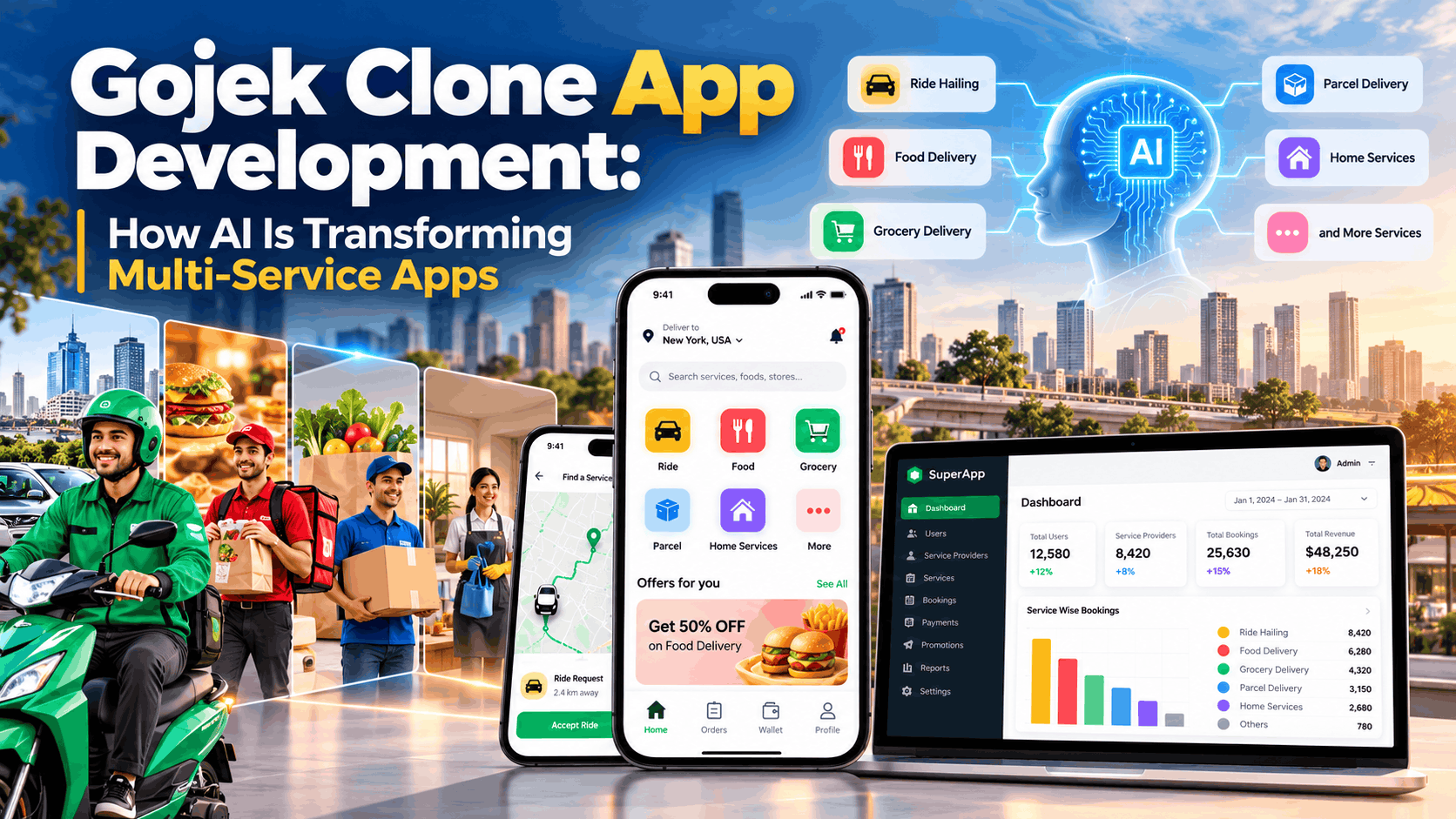
Gojek Clone App Development: How AI Is Transforming Multi-Service Apps
-
Customers increasingly expect digital platforms to handle multiple everyday needs through a single application. From booking rides and ordering food to purchasing groceries, sending parcels, and hiring professionals, convenience has become a major part of the digital service experience. This shift has created opportunities for entrepreneurs looking to build multi-service platforms inspired by successful super-app… Read More
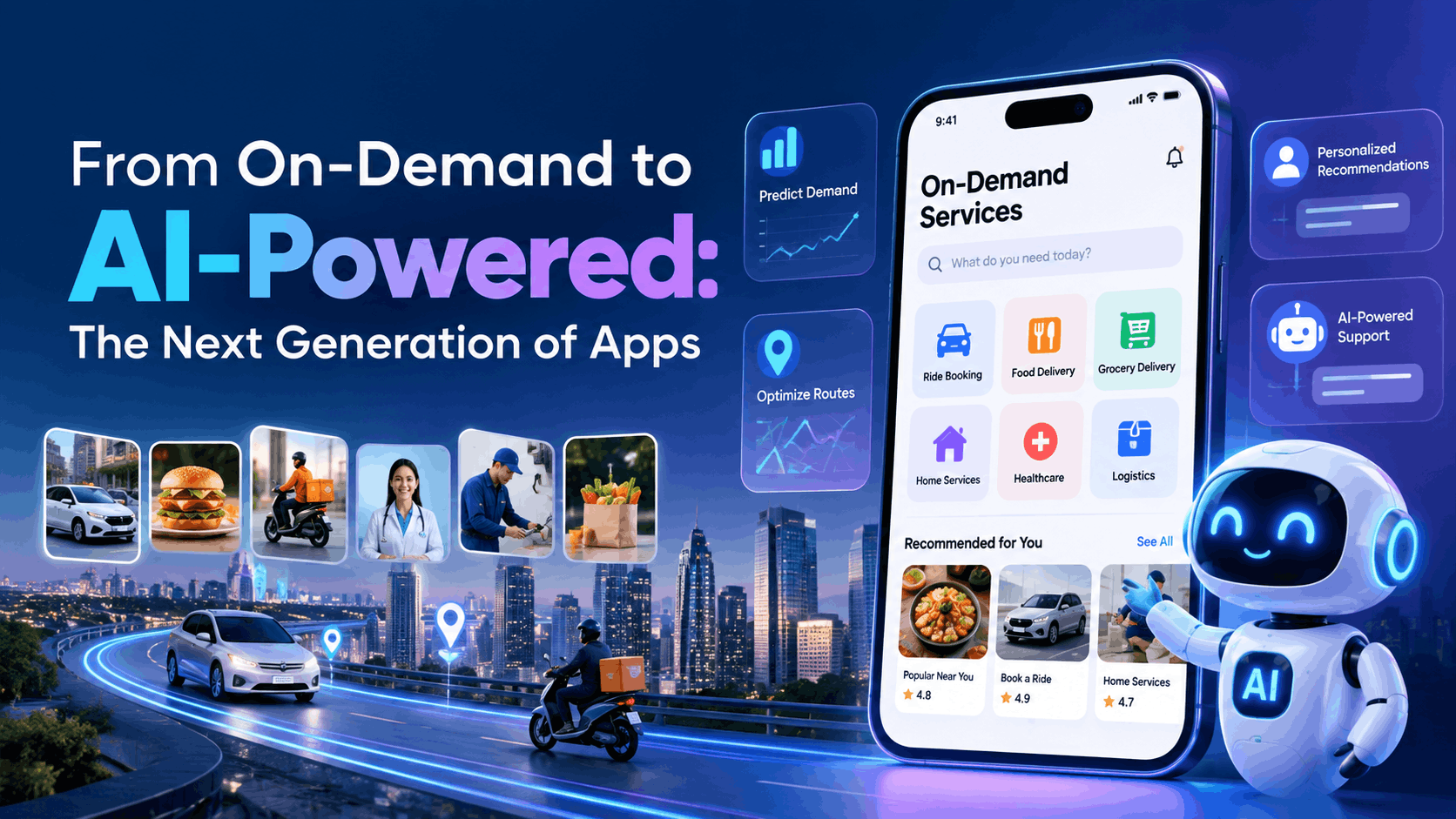
From On-Demand to AI-Powered: The Next Generation of Apps
-
On-demand apps have changed the way people access transportation, food, healthcare, home services, deliveries, and other everyday services. Customers can request what they need, track progress, make payments, and receive services through a single digital platform. But customer expectations are changing. People increasingly want faster responses, personalized recommendations, accurate updates, and smoother digital experiences. Businesses,… Read More
How to Choose an On Demand App Development Company for Your AI-Powered Business
-
Businesses across industries are moving toward on-demand services as customers increasingly expect convenience, speed, and personalized experiences. From food delivery and transportation to healthcare, home services, logistics, and grocery delivery, on-demand platforms are changing how businesses connect with their customers. The market is also becoming increasingly intelligent. The global AI in transportation market is estimated… Read More
Recent Posts
 Gojek Clone App Development: How AI Is Transforming Multi-Service Apps
 From On-Demand to AI-Powered: The Next Generation of Apps
 How to Choose an On Demand App Development Company for Your AI-Powered Business
 AI in Transportation: How Artificial Intelligence Is Transforming the Way We Move
 How Courier App Development Improves Delivery Operations