
From Clone Apps to AI Ecosystems: The Future of On-Demand App Development
-
Chirag Vaghasiya
- May 08, 2026
- 6 min read
The on demand app industry has evolved rapidly over the last decade. Businesses once focused mainly on launching clone apps inspired by platforms like Uber, DoorDash, Instacart, and Postmates. These apps helped startups enter the market quickly with proven business models and readymade workflows.
However, the market in 2026 looks completely different.
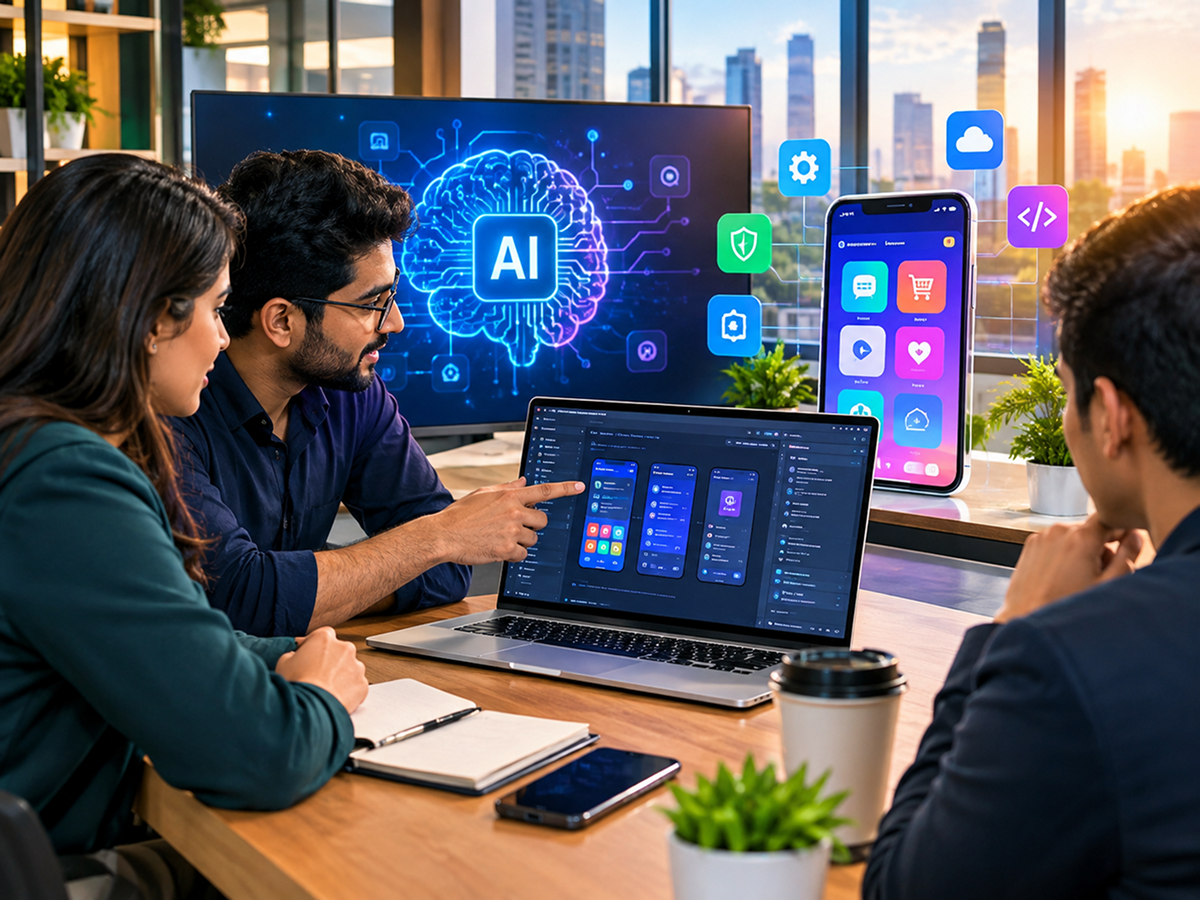
Today, businesses are no longer looking for simple clone apps with basic booking and delivery features. They want intelligent digital ecosystems powered by Artificial Intelligence, automation, predictive analytics, and personalized customer experiences.
Modern users expect apps to understand their behavior, predict their needs, automate repetitive tasks, and deliver faster and smarter services.
This shift is transforming the future of on demand app development.
Businesses that continue relying only on traditional clone app models may struggle to compete in an AI-driven market. On the other hand, companies investing in AI-powered ecosystems are creating stronger customer retention, better operational efficiency, and scalable revenue models.
In this blog, we will explore how on demand apps are evolving from simple clone platforms into intelligent AI-powered ecosystems and why this transformation matters for startups and enterprises in 2026.
◉ The Evolution of On Demand Apps
Phase 1: The Rise of Clone Apps
The first generation of on demand apps focused on solving everyday problems with convenience.
Businesses launched apps for:
- Food delivery
- Cab booking
- Grocery delivery
- Courier services
- Medicine delivery
- Home services
- Logistics management
Clone app development became highly popular because it offered:
- Faster time to market
- Lower development costs
- Proven business models
- Easy scalability
- Reduced business risks
Many startups preferred launching apps inspired by successful platforms instead of building entirely new concepts.
This approach helped thousands of businesses enter the digital economy.
However, as competition increased, users started expecting more than basic functionality.
Phase 2: The Rise of Multi Service Platforms
As customer expectations evolved, businesses started moving beyond single service apps.
Instead of offering only one service, companies began integrating multiple services into a unified ecosystem.
This led to the growing demand for super app development and multi service ecosystems.
Popular examples include:
- Gojek
- Grab
- Tata Neu
These platforms combined:
- Food delivery
- Ride booking
- Digital payments
- Grocery delivery
- Shopping
- Financial services
- Loyalty programs
- Subscription systems
The goal was simple.
Keep users inside one ecosystem instead of sending them to multiple apps.
This model improved customer retention and increased revenue opportunities.
According to Statista, the global super apps market is expected to grow significantly as businesses continue investing in integrated digital ecosystems.
◉ Why Traditional Clone Apps Are No Longer Enough
Clone apps still provide value for businesses entering the market quickly. However, relying only on basic clone functionality is no longer enough to stay competitive.
Several major challenges are affecting traditional on demand apps.
Market Saturation
Almost every industry now has hundreds of similar apps offering the same services.
Users can easily switch between platforms based on pricing, speed, or convenience.
Lack of Personalization
Traditional apps often provide the same experience to every customer.
Modern users expect personalized recommendations, customized offers, and intelligent suggestions.
Rising Customer Acquisition Costs
Digital advertising costs continue to increase across platforms.
Businesses now need stronger retention strategies instead of depending only on new customer acquisition.
Operational Inefficiencies
Manual dispatching, customer support, and inventory management create unnecessary delays and higher operational costs.
Weak Customer Retention
Without intelligent engagement systems, users often abandon apps after a few uses.
In 2026, functionality alone is not enough; businesses must deliver intelligent experiences.
◉ The Rise of AI-Powered Ecosystems
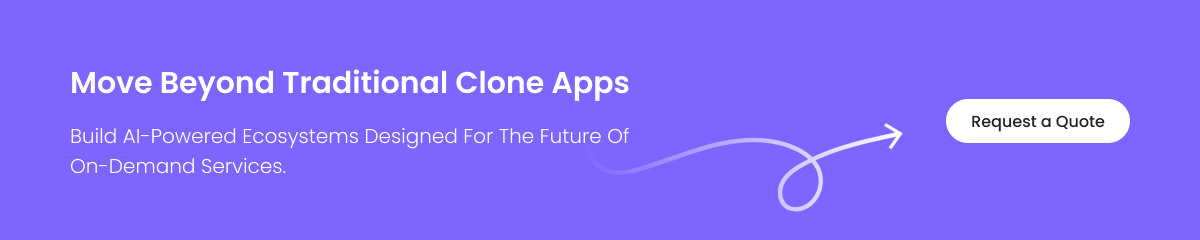
Artificial Intelligence is becoming the foundation of next-generation on-demand apps.
Instead of functioning as standalone platforms, modern apps are evolving into intelligent ecosystems capable of learning, adapting, and automating operations.
AI-powered ecosystems combine:
- Artificial Intelligence
- Machine Learning
- Real-time analytics
- Automation systems
- Conversational interfaces
- Predictive technologies
These technologies help businesses improve both customer experience and operational efficiency.
AI Personalization
Personalization has become one of the biggest competitive advantages in modern apps.
AI systems analyze user behavior, preferences, location, order history, and engagement patterns to deliver customized experiences.
Examples include:
- Personalized food recommendations
- Smart product suggestions
- Dynamic offers
- Customized notifications
- Predictive search results
Netflix and Amazon have already demonstrated how personalization improves user engagement and retention.
According to McKinsey, companies using advanced personalization can increase revenue by up to 15%.
AI-Powered Customer Support
Modern on demand apps are integrating AI chatbots and virtual assistants to provide instant customer support.
These systems can:
- Answer customer queries
- Process refunds
- Track orders
- Resolve delivery issues
- Recommend products
- Handle support requests 24/7
AI-powered support reduces operational costs while improving customer satisfaction.
According to Gartner, conversational AI will play a major role in customer service automation over the coming years.
Predictive Analytics
Predictive analytics helps businesses forecast customer behavior and operational demands.
AI systems can predict:
- Order demand
- Delivery traffic
- Inventory shortages
- Peak business hours
- Customer churn risks
This allows businesses to optimize resources and improve efficiency.
For example, grocery delivery platforms can prepare inventory before demand spikes occur.
Smart Dispatching and Route Optimization
AI-powered logistics systems can automatically optimize delivery routes based on:
- Traffic conditions
- Weather updates
- Delivery priorities
- Driver availability
- Distance calculations
This improves delivery speed while reducing fuel costs.
According to Deloitte, AI-based logistics optimization is becoming a major priority across the delivery and transportation industries.
Conversational Commerce and Voice Integration
Users are increasingly interacting with apps through voice commands and conversational interfaces.
Modern AI-powered apps are integrating:
- Voice ordering
- AI shopping assistants
- Smart recommendations
- Natural language search
- Conversational booking systems
This trend is transforming how users interact with digital platforms.
Voice commerce is expected to continue growing as AI assistants become more accurate and widely adopted.
You May Also Like: How Multi-Agent AI Systems Are Powering On-Demand Apps
◉ Emerging Trends Shaping On Demand Apps in 2026
AI Agents Inside Apps
AI agents are becoming one of the biggest innovations in app development.
Instead of waiting for user commands, AI agents can proactively perform tasks such as:
- Booking services
- Managing subscriptions
- Scheduling deliveries
- Sending reminders
- Handling customer requests
This creates faster and more intelligent user experiences.
Hyperlocal AI Delivery Systems
Hyperlocal businesses are using AI to optimize local deliveries.
AI systems help:
- Reduce delivery times
- Predict demand areas
- Improve dispatching
- Minimize failed deliveries
Quick commerce companies are heavily investing in AI-driven logistics.
Subscription-Based Ecosystems
Many on demand platforms are moving toward subscription-based business models.
Examples include:
- Free delivery memberships
- Premium customer plans
- Exclusive discounts
- Loyalty ecosystems
Subscriptions help businesses generate recurring revenue and improve customer retention.
Real Time Predictive Experiences
Modern apps are becoming predictive instead of reactive.
AI systems can suggest actions before users even search for them.
Examples include:
- Predicting reorder timing
- Suggesting frequently used services
- Recommending products based on habits
- Anticipating customer needs
Multi Service Super Apps
Businesses are increasingly combining multiple services into one platform.
This strategy improves:
- Customer engagement
- Cross selling opportunities
- User retention
- Brand loyalty
Super apps are expected to continue expanding globally.

◉ Industries Being Transformed by AI Ecosystems
Food Delivery
Food delivery apps are becoming intelligent dining ecosystems.
AI is helping platforms with:
- Personalized food suggestions
- Delivery prediction
- Smart kitchen operations
- Customer behavior analysis
Logistics and Courier Services
AI powered logistics systems improve:
- Fleet management
- Delivery tracking
- Route optimization
- Demand forecasting
Healthcare and Pharmacy Apps
Healthcare apps now integrate:
- AI symptom checking
- Smart medicine reminders
- Automated appointment scheduling
- Predictive healthcare analytics
Grocery Delivery Apps
AI helps grocery platforms manage:
- Inventory forecasting
- Customer preferences
- Delivery optimization
- Dynamic pricing
Mobility and Transportation
Transportation apps are using AI for:
- Smart ride matching
- Demand prediction
- Driver allocation
- Traffic optimization
◉ Essential Features of Future Ready On Demand Apps
Businesses planning modern app development should focus on features that improve intelligence, automation, and personalization.
Here are the key features to include:
- AI Chatbots: Instant customer support and automated interactions.
- Smart Recommendations: Personalized product and service suggestions.
- Voice Search and Voice Commands: Allow users to use the app easily with simple voice commands.
- Predictive Analytics Dashboard: Business insights and forecasting tools.
- Real Time Tracking: Track deliveries, bookings, and services instantly with live status updates.
- Dynamic Pricing Engine: Automated pricing based on demand and availability.
- Loyalty and Rewards Systems: Improved customer retention strategies.
- Multi Service Integration: Combining multiple services inside one platform.
- AI Fraud Detection: Enhanced security and fraud prevention.
- Automated Workflow Systems: Reducing manual operational tasks.
You May Also Like: Cost to Build an On‑Demand App With AI Features
◉ Technologies Powering AI Ecosystems
Modern on demand ecosystems depend on advanced technologies, such as:
- Artificial Intelligence
- Machine Learning
- Cloud Computing
- Big Data Analytics
- Internet of Things
- Generative AI APIs
- Real Time Data Processing
- Blockchain for secure transactions
Cloud infrastructure plays a major role in scalability and performance.
According to Grand View Research, the global AI market continues to grow rapidly across industries.
◉ Challenges Businesses Must Prepare For
Although AI-powered ecosystems offer significant advantages, businesses also face important challenges.
- High Initial Investment: AI integration often requires advanced infrastructure and skilled development teams.
- Data Privacy and Security: Handling customer data responsibly is critical. Businesses must comply with data protection regulations.
- Integration Complexity: Connecting multiple systems and services inside one ecosystem can be technically challenging.
- Scalability Issues: Rapidly growing platforms need a scalable cloud architecture.
- User Trust: Businesses must ensure transparency and reliability in AI-powered systems.
◉ What Startups Should Focus on in 2026
Startups entering the on demand market should avoid building generic apps with only basic functionality.
Instead, they should focus on:
- AI-powered automation
- Personalized user experiences
- Multi-service ecosystems
- Customer retention strategies
- Predictive analytics
- Intelligent operations
- Scalable infrastructure
The future belongs to businesses that create intelligent digital ecosystems instead of standalone applications.
Companies that adopt AI early will gain a strong competitive advantage in customer engagement, operational efficiency, and long-term scalability.
◉ Conclusion
The on demand industry is entering a completely new era.
Traditional clone apps helped businesses launch quickly and validate business models. However, modern customer expectations and growing market competition are driving the shift toward AI-powered ecosystems.
Businesses today need more than simple booking and delivery platforms.
They need intelligent applications capable of:
- Predicting customer behavior
- Automating operations
- Personalizing experiences
- Improving efficiency
- Creating long-term customer loyalty
From AI agents and predictive analytics to conversational commerce and super apps, the future of on demand app development will be defined by intelligence, automation, and ecosystem thinking.
Businesses that embrace this transformation early will be better positioned for growth in the digital economy of 2026 and beyond.
If you are planning to build a future ready on demand app, now is the time to move beyond traditional clone app models and invest in AI-powered ecosystems.

Chirag Vaghasiya is a Sr. SEO Executive at XongoLab Technologies LLP and PeppyOcean having skills in on-page optimization, off-page optimization, website promotion on major search engines, competitor research, internet marketing, quality link building, content optimization, and SMO.
You may also like
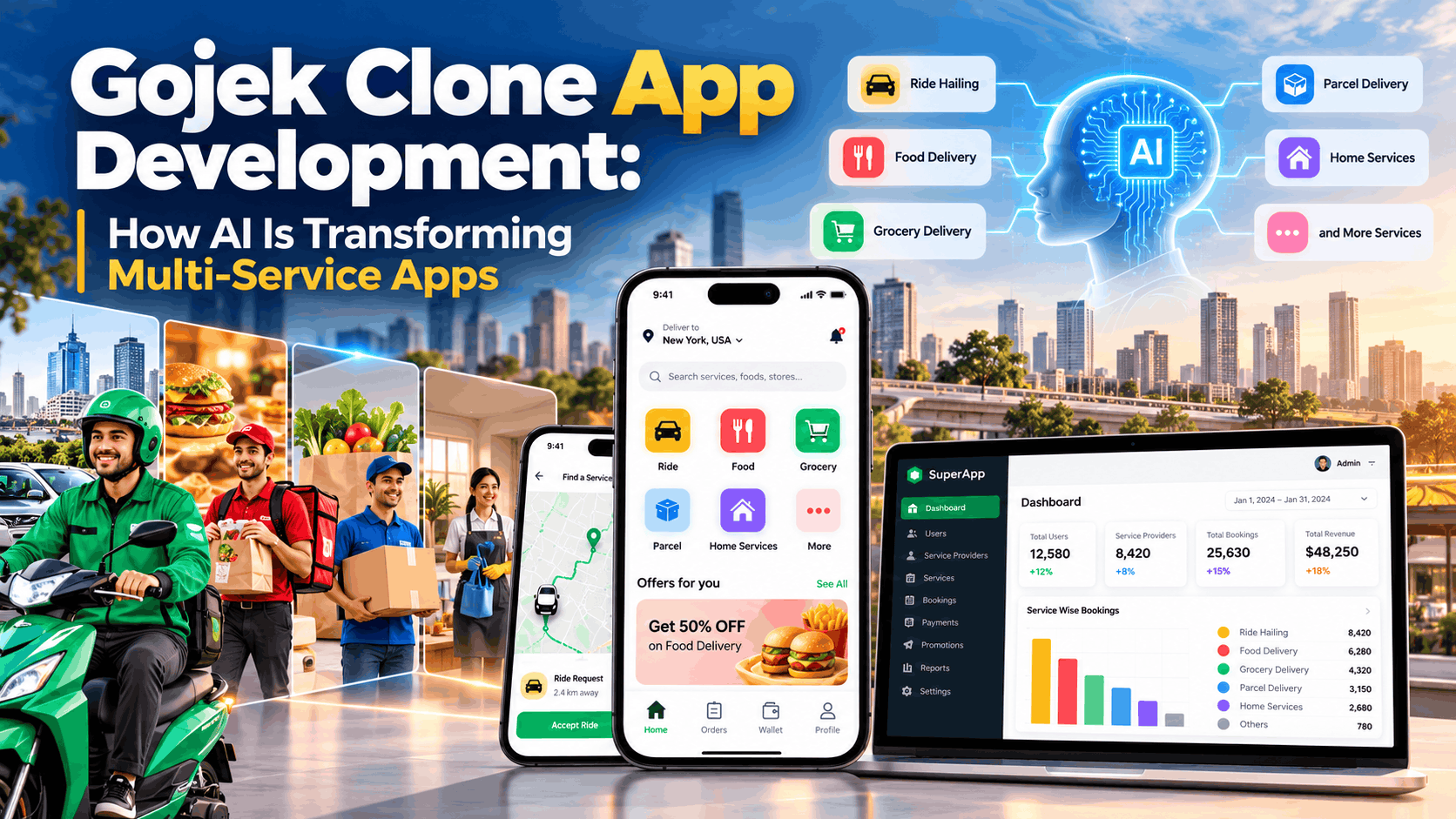
Gojek Clone App Development: How AI Is Transforming Multi-Service Apps
-
Ankit Patel
Customers increasingly expect digital platforms to handle multiple everyday needs through a single application. From booking rides and ordering food to purchasing groceries, sending parcels, and hiring professionals, convenience has become a major part of the digital service experience. This shift has created opportunities for entrepreneurs looking to build multi-service platforms inspired by successful super-app… Read More
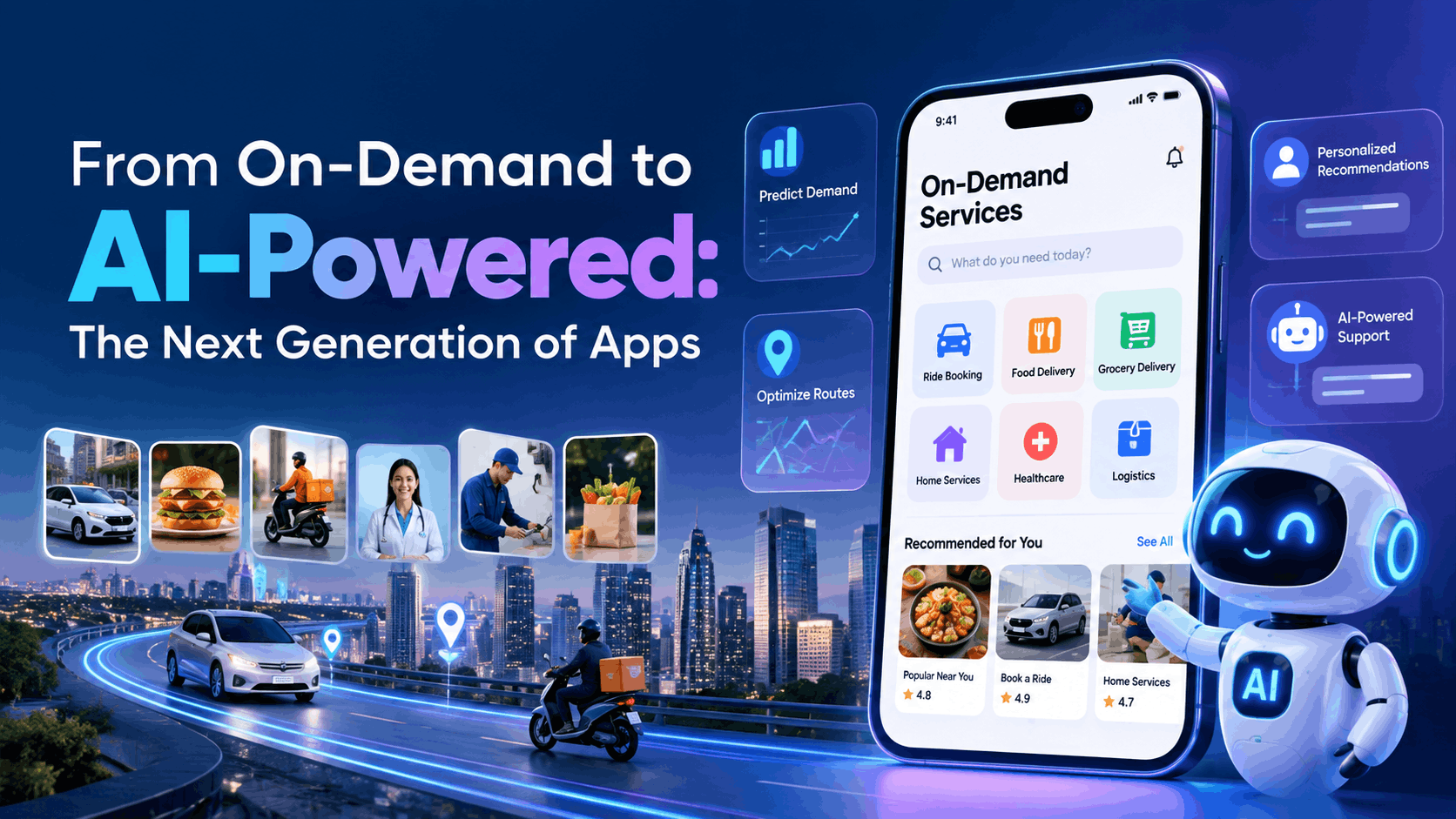
From On-Demand to AI-Powered: The Next Generation of Apps
-
On-demand apps have changed the way people access transportation, food, healthcare, home services, deliveries, and other everyday services. Customers can request what they need, track progress, make payments, and receive services through a single digital platform. But customer expectations are changing. People increasingly want faster responses, personalized recommendations, accurate updates, and smoother digital experiences. Businesses,… Read More
How to Choose an On Demand App Development Company for Your AI-Powered Business
-
Businesses across industries are moving toward on-demand services as customers increasingly expect convenience, speed, and personalized experiences. From food delivery and transportation to healthcare, home services, logistics, and grocery delivery, on-demand platforms are changing how businesses connect with their customers. The market is also becoming increasingly intelligent. The global AI in transportation market is estimated… Read More
Recent Posts
 Gojek Clone App Development: How AI Is Transforming Multi-Service Apps
 From On-Demand to AI-Powered: The Next Generation of Apps
 How to Choose an On Demand App Development Company for Your AI-Powered Business
 AI in Transportation: How Artificial Intelligence Is Transforming the Way We Move
 How Courier App Development Improves Delivery Operations