
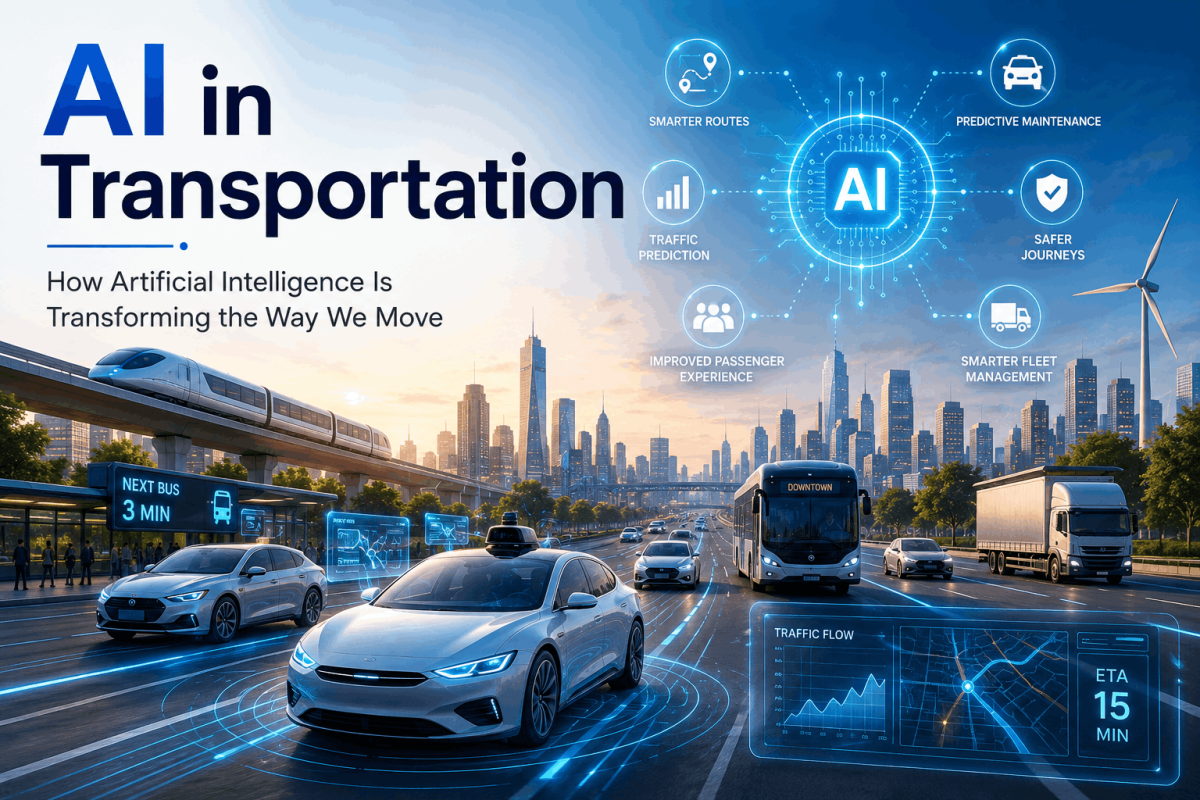
AI in Transportation: How Artificial Intelligence Is Transforming the Way We Move
-
Ankit Patel
- August 22, 2026
- 7 min read
Transportation has always evolved alongside technology. From steam-powered trains to electric vehicles and GPS navigation, every major innovation has changed how people and goods move from one place to another. Today, AI in transportation is becoming another major turning point.
Artificial intelligence is helping transportation companies make faster decisions, understand changing travel patterns, improve fleet performance, predict potential problems, and create more personalized travel experiences. Instead of relying entirely on fixed schedules, historical assumptions, or manual processes, transportation systems can now analyze large volumes of data and respond to changing conditions.
For businesses, this shift is about more than adopting new technology. It is about finding practical ways to reduce operational inefficiencies while making transportation safer, faster, and more responsive.
What Is AI in Transportation?
AI in transportation refers to the use of artificial intelligence technologies such as machine learning, predictive analytics, computer vision, natural language processing, and data-driven automation to improve transportation operations and services.
These technologies can process information from GPS systems, connected vehicles, traffic networks, weather conditions, customer activity, vehicle sensors, and other data sources. AI can then identify patterns and generate predictions or recommendations that support better decisions.
For example, a conventional navigation system may identify the shortest route based on available map information. An AI-powered system can go further by analyzing current traffic, historical congestion patterns, road conditions, vehicle information, and estimated travel demand to recommend a more efficient route.
This makes transportation systems increasingly intelligent and adaptable.
AI in Transportation: Key Statistics
The growth of artificial intelligence in transportation is already reflected in market forecasts and real-world deployments:
“95 organizations: The U.S. Department of Transportation received 95 unique responses documenting current and potential AI applications across the transportation sector.
$4.27 billion: Estimated global AI in transportation market size in 2025.
$10.8 billion: Projected market size by 2030, representing an estimated 20.3% CAGR.
Up to 20%: Reduction in maintenance costs reported in a Maersk example involving predictive capabilities, according to an OECD review.
These figures highlight an important shift: AI is moving beyond experimentation and becoming part of practical transportation planning, fleet management, logistics, maintenance, and mobility systems.
How AI Is Being Used in Transportation
The applications of artificial intelligence extend across passenger transportation, logistics, public transit, fleet operations, and delivery services. Some of the most important applications include the following.
1. Intelligent Route Optimization
One of the most practical uses of AI is route planning. Transportation companies often need to coordinate multiple vehicles, destinations, drivers, delivery windows, and changing road conditions.
AI can analyze these variables simultaneously and recommend routes based on factors such as traffic, distance, delivery priorities, fuel consumption, and estimated arrival times.
For fleet operators, this can mean fewer unnecessary miles and better vehicle utilization. For delivery businesses, intelligent route planning can also help drivers handle more stops while responding to unexpected changes during a journey.
2. Predictive Maintenance for Vehicles
Unexpected vehicle breakdowns can disrupt schedules and increase operating costs. Traditional maintenance often follows fixed service intervals, but not every vehicle experiences the same level of wear.
AI-powered predictive maintenance uses information from vehicle sensors and historical maintenance records to identify patterns that may indicate a developing issue.
Instead of waiting for a component to fail, fleet managers can receive an indication that maintenance may be required. This can help businesses plan servicing around operational schedules and potentially reduce avoidable downtime.
3. Traffic Prediction and Management
Traffic conditions can change within minutes. Accidents, weather, road construction, events, and rush-hour demand can all affect travel times.
AI can analyze historical and real-time transportation data to identify congestion patterns and predict how traffic may develop. Transportation authorities can use these insights to support traffic management, while navigation and mobility platforms can use them to provide better route recommendations.
This is an important part of developing more responsive intelligent transportation systems.
4. Smarter Fleet Management
Managing a large fleet involves much more than knowing where vehicles are located. Businesses also need to monitor utilization, driver behavior, fuel consumption, maintenance schedules, delivery performance, and operational costs.
AI can bring these data points together and identify trends that may not be obvious through manual analysis.
For example, fleet managers can use AI-powered analytics to identify underused vehicles, inefficient routes, unusual driving patterns, or recurring delays. These insights can support better operational decisions and more efficient resource allocation.
5. Improved Safety
Safety is another area where AI has significant potential. Computer vision systems can analyze camera feeds to identify situations such as driver distraction, lane departures, obstacles, or unusual road conditions.
AI can also help analyze driving behavior and identify patterns associated with harsh braking, speeding, rapid acceleration, or other potentially risky actions.
These capabilities can support driver training and proactive safety programs while helping transportation businesses better understand where risks occur.
6. Demand Forecasting
Transportation demand is rarely consistent. Passenger numbers and delivery volumes can vary depending on the time of day, season, location, weather, events, and other factors.
AI can analyze historical and current data to forecast future demand. Public transportation operators can use these insights to plan capacity, while logistics businesses can prepare vehicles and personnel for expected shipment volumes.
Better forecasting can reduce both underutilization and unnecessary resource deployment.
What Are AI Transportation Solutions?
AI transportation solutions are technology-driven systems designed to solve specific operational, mobility, or customer-experience challenges using artificial intelligence.
Rather than being a single product, the term can include a wide range of applications, such as:
- AI-powered fleet management platforms
- Intelligent route optimization systems
- Predictive vehicle maintenance tools
- Traffic forecasting platforms
- Driver behavior monitoring systems
- Smart parking solutions
- Transportation demand forecasting
- AI-powered logistics platforms
- Computer vision-based safety systems
- Intelligent public transit management
The right solution depends on the organization’s objectives. A logistics company may prioritize route optimization and delivery forecasting, while a public transit operator may focus more heavily on demand prediction and passenger flow.
The value of AI comes from matching the technology to a real transportation problem.
The Role of an AI-Driven Transportation App
Mobile applications have already changed how people book rides, track deliveries, navigate cities, and interact with transportation services. Adding artificial intelligence can make these applications considerably more responsive.
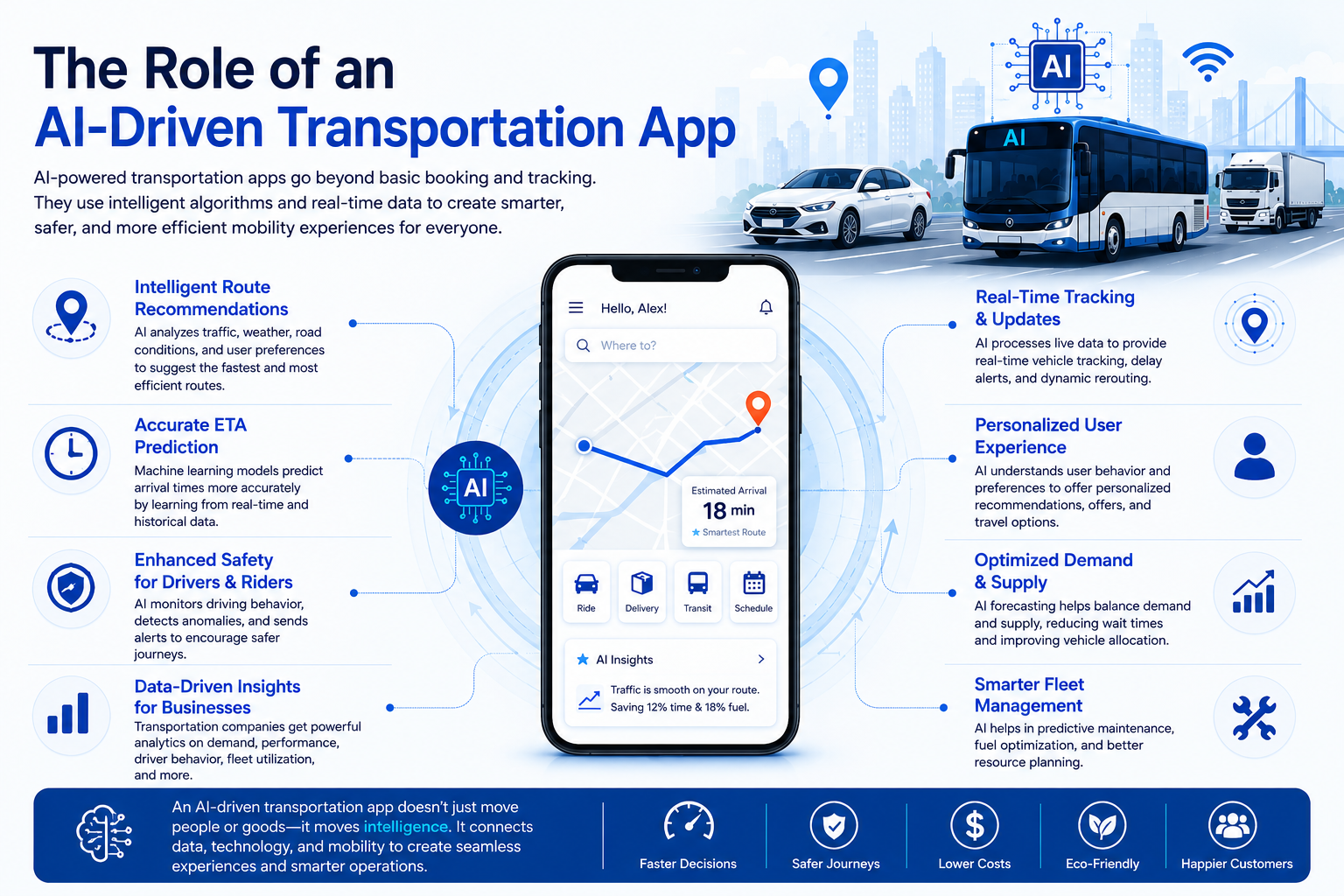
An AI driven transportation app can analyze user behavior, location data, traffic conditions, historical journeys, and other information to deliver more relevant recommendations.
For passengers, this could mean smarter route suggestions, estimated arrival predictions, personalized travel options, or real-time updates.
For drivers, an AI-enabled application could recommend efficient routes, identify changing traffic conditions, provide trip insights, or support safer driving behavior.
For transportation businesses, the same application can become a source of operational intelligence by connecting drivers, vehicles, customers, and management teams within one digital ecosystem.
The important difference is that an AI-enabled app does not simply display information. It can analyze information and use that analysis to support decisions.
What Does AI Transportation App Development Involve?
Developing an AI-powered transportation application requires more than adding an AI feature to an existing mobile app. The development process typically starts by identifying the specific transportation problem the application needs to solve.
The next step involves determining what data the system needs. Depending on the application, this may include GPS information, vehicle data, traffic information, user activity, trip history, weather data, or operational records.
During AI transportation app development, developers and data specialists may work with technologies such as machine learning, predictive analytics, cloud platforms, APIs, GPS services, IoT devices, and real-time data processing systems.
Important features can include:
- Real-time vehicle tracking
- Intelligent route recommendations
- ETA prediction
- Driver and vehicle monitoring
- Demand forecasting
- Automated notifications
- Digital payments
- Trip history and analytics
- AI-powered customer support
- Fleet dashboards
Security and scalability also need to be considered from the beginning. Transportation applications can handle sensitive location, customer, payment, and operational information, making data protection an essential part of development.
AI models should also be monitored and improved over time because transportation conditions and user behavior continuously change.
Benefits of AI in Transportation
The value of AI in transportation becomes clearer when its applications are connected to measurable operational outcomes.
• Greater Operational Efficiency
AI can analyze large volumes of transportation data and help businesses identify inefficient routes, recurring delays, underused vehicles, and changing demand patterns. This can support faster and more informed operational decisions.
• Lower Maintenance Costs and Downtime
Predictive maintenance is one area where AI can have a direct operational impact. By analyzing sensor data and identifying early signs of potential mechanical problems, AI systems can help maintenance teams intervene before failures occur. An OECD review cites a Maersk example in which predictive capabilities helped reduce maintenance costs by up to 20%.
• Better Customer Experience
Accurate ETAs, real-time updates, intelligent route recommendations, and personalized transportation options can make journeys and deliveries more predictable for customers.
• More Data-Driven Planning
AI can turn historical and real-time transportation data into forecasts and recommendations. This is increasingly important as transportation organizations manage complex networks involving vehicles, passengers, infrastructure, weather, traffic, and fluctuating demand.
The U.S. Department of Transportation also emphasizes the importance of high-quality data for advanced analytics and AI, noting that data provides the foundation for predictive and prescriptive approaches to transportation challenges.

Challenges of Implementing AI in Transportation
Despite its potential, AI implementation is not without challenges.
Data quality is one of the biggest considerations. AI systems depend on reliable information, and incomplete or inaccurate data can affect results.
Integration with existing systems can also be difficult, particularly for established transportation companies using older software and infrastructure.
There are also important concerns around data security, privacy, cybersecurity, regulatory requirements, and system reliability. Transportation technology often operates in environments where errors can have significant consequences, so AI systems need appropriate testing, monitoring, and human oversight.
Finally, implementing AI requires investment in technology, skilled professionals, infrastructure, and ongoing system improvement.
The Future of AI in Transportation
The future of transportation is likely to become increasingly connected and intelligent. AI will continue to work alongside technologies such as IoT, connected vehicles, cloud computing, edge computing, advanced sensors, and autonomous systems.
We can expect greater use of predictive transportation networks, intelligent public transit, automated logistics, connected fleet ecosystems, and more sophisticated mobility platforms.
AI may also help transportation providers move from reacting to problems toward predicting them before they occur. Instead of simply responding to congestion, maintenance issues, or demand fluctuations, transportation systems can increasingly anticipate these situations and adjust accordingly.
However, the future will not depend on AI alone. Successful transportation systems will need a combination of intelligent technology, reliable infrastructure, human oversight, strong security practices, and thoughtful implementation.
Frequently Asked Questions
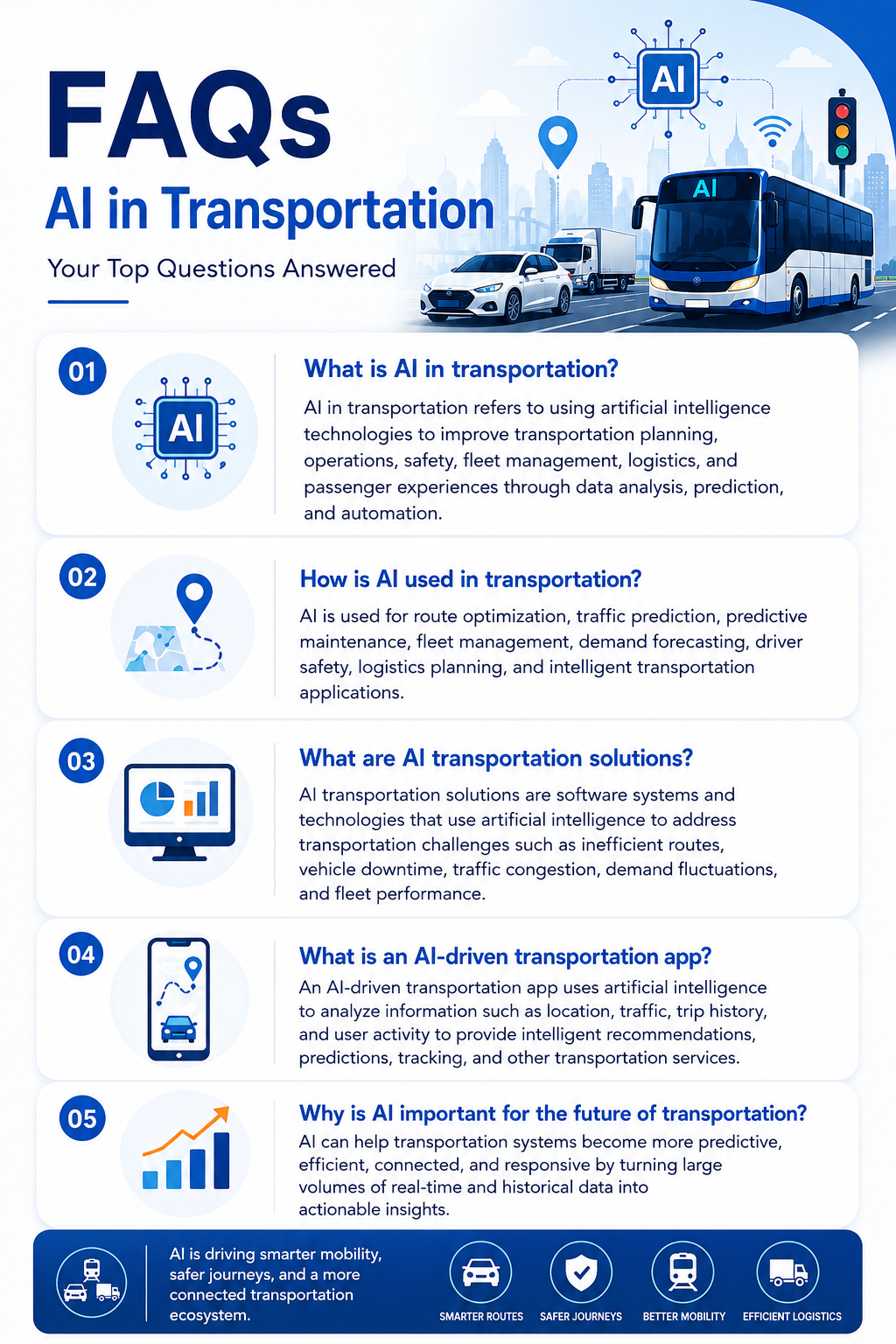
As artificial intelligence becomes part of everyday mobility and transportation operations, businesses and users naturally have questions about how these systems work, where they deliver the most value, and what it takes to implement them. The answers below address some of the most common questions about AI in transportation, from practical applications and intelligent transportation solutions to AI-powered apps and the future of connected mobility.
Final Thoughts
AI in transportation is changing the industry by making mobility and logistics more predictive, connected, and data-driven. From intelligent route optimization and predictive maintenance to AI-powered applications and fleet analytics, artificial intelligence is helping organizations address challenges that were previously difficult to manage at scale.
For businesses considering AI transportation solutions, the best starting point is not simply asking where AI can be added. The more useful question is: Which transportation problem can AI solve better?
That shift in perspective can help organizations choose the right technology, build more meaningful applications, and create transportation experiences that are efficient for businesses and convenient for the people who depend on them.

Ankit Patel is the Project Delivery Head at XongoLab Technologies LLP and PeppyOcean, leading mobile app development companies specializing in custom software & mobile app solutions. Passionate about technology and innovation, he enjoys writing about mobile & software development, business, and marketing. His articles have been featured on renowned publications, including YourStory, E27, Datafloq, JaxEnter, TechTarget, Adobe, DesignWebKit, InstantShift, Business Magazine, Simple Programmer, and many others.
You may also like
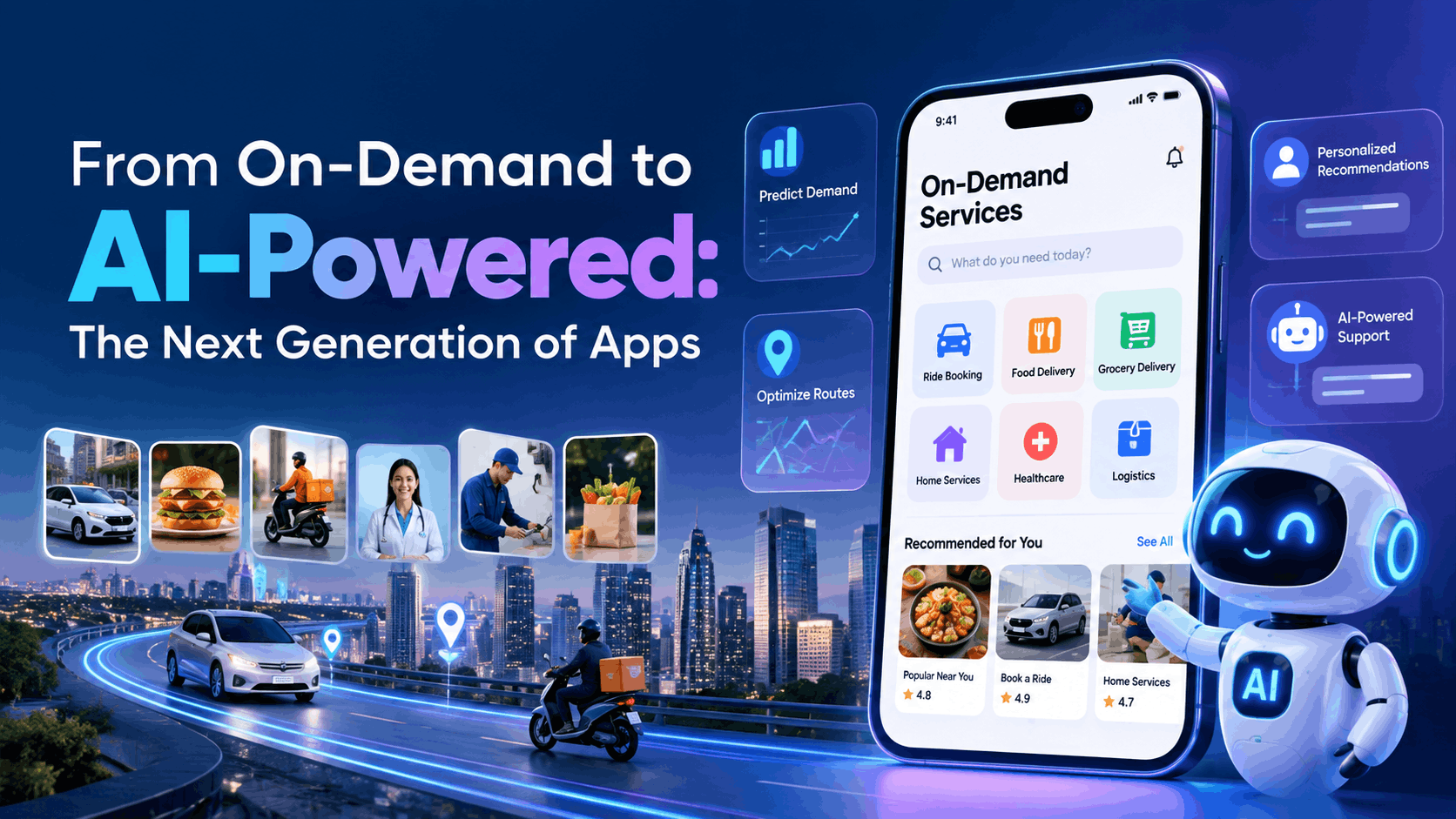
From On-Demand to AI-Powered: The Next Generation of Apps
-
On-demand apps have changed the way people access transportation, food, healthcare, home services, deliveries, and other everyday services. Customers can request what they need, track progress, make payments, and receive services through a single digital platform. But customer expectations are changing. People increasingly want faster responses, personalized recommendations, accurate updates, and smoother digital experiences. Businesses,… Read More

How to Choose an On Demand App Development Company for Your AI-Powered Business
-
Businesses across industries are moving toward on-demand services as customers increasingly expect convenience, speed, and personalized experiences. From food delivery and transportation to healthcare, home services, logistics, and grocery delivery, on-demand platforms are changing how businesses connect with their customers. The market is also becoming increasingly intelligent. The global AI in transportation market is estimated… Read More
How Courier App Development Improves Delivery Operations
-
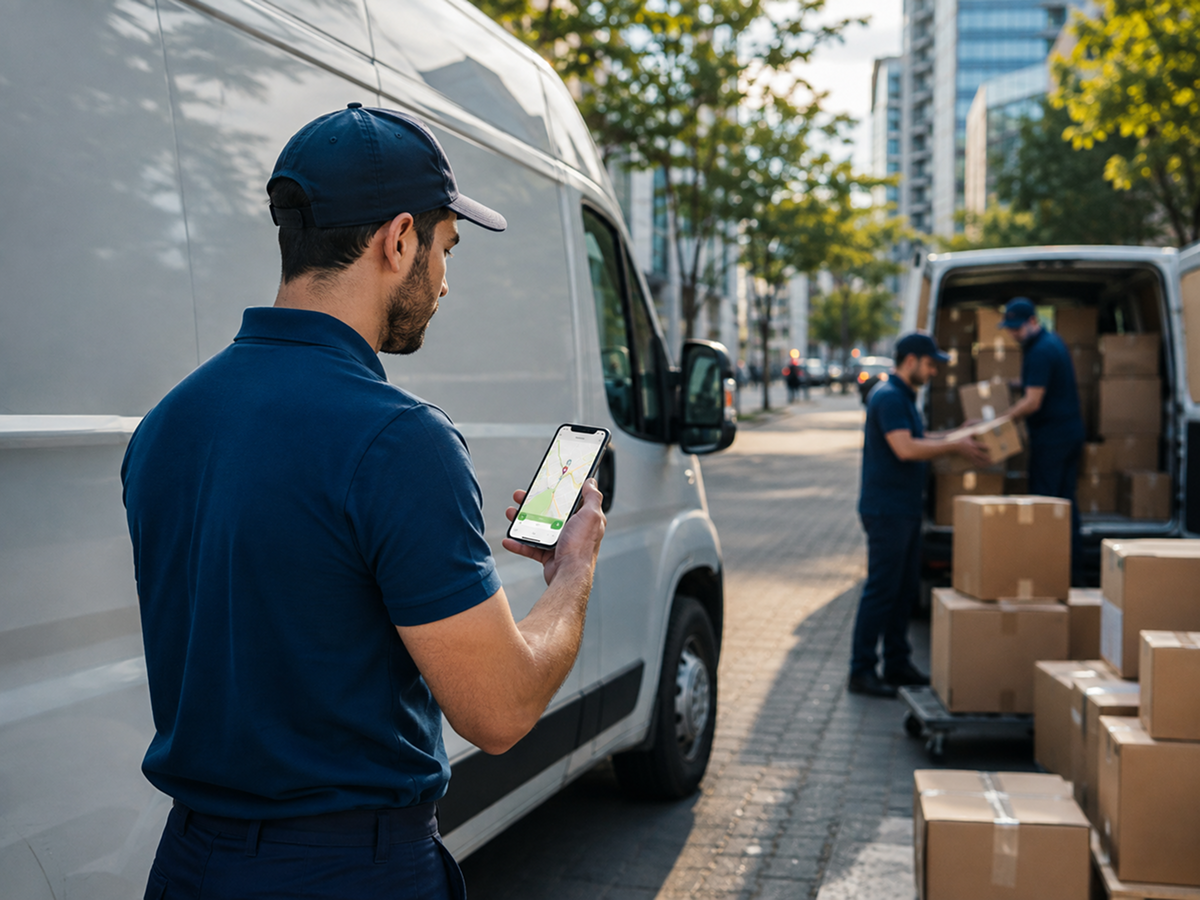
A customer places an order and expects one thing: the package should arrive when promised. Behind that simple expectation, courier businesses have to coordinate orders, drivers, routes, payments, tracking, customer updates, and delivery schedules every day. As delivery volumes grow, managing these activities through spreadsheets, phone calls, or disconnected systems becomes difficult. A small delay… Read More
Recent Posts
 From On-Demand to AI-Powered: The Next Generation of Apps
 How to Choose an On Demand App Development Company for Your AI-Powered Business
 AI in Transportation: How Artificial Intelligence Is Transforming the Way We Move
 How Courier App Development Improves Delivery Operations
 How AI Can Improve Your Food Delivery App with Intelligent Automation