
How Courier App Development Improves Delivery Operations
-
Ankit Patel
- August 13, 2026
- 6 min read
A customer places an order and expects one thing: the package should arrive when promised. Behind that simple expectation, courier businesses have to coordinate orders, drivers, routes, payments, tracking, customer updates, and delivery schedules every day.
As delivery volumes grow, managing these activities through spreadsheets, phone calls, or disconnected systems becomes difficult. A small delay in one part of the process can affect several deliveries that follow.
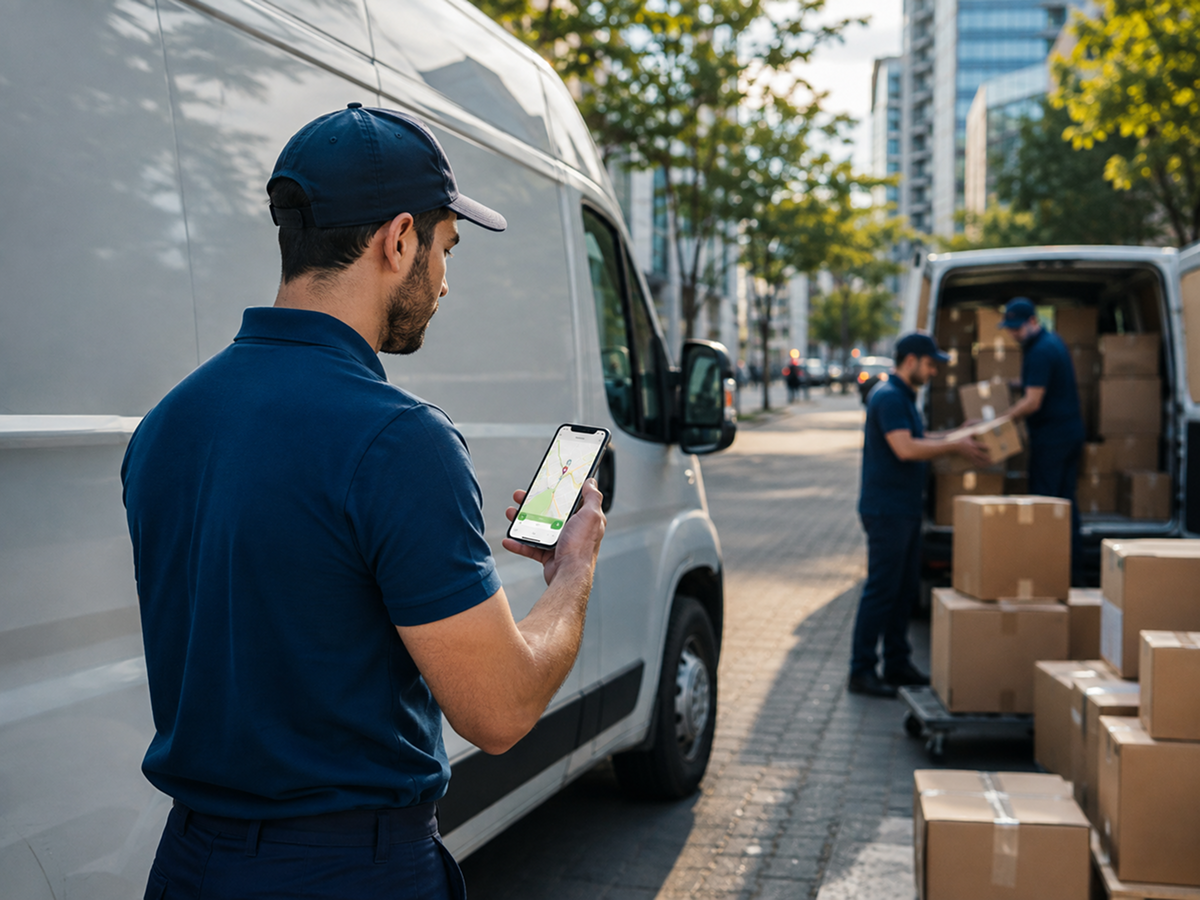
This is where courier app development services can help businesses bring their delivery operations into one connected platform. From booking and driver assignment to live tracking and delivery confirmation, a well-planned courier app can make everyday tasks easier to manage while giving customers greater visibility.
“The World Economic Forum has projected that the number of delivery vehicles in major cities could rise substantially by 2030 as online shopping and urban deliveries increase.
The demand for efficient last-mile delivery continues to grow. For courier businesses, improving operational efficiency is becoming increasingly important.
Where Courier Businesses Lose Time
Delivery problems do not always come from a lack of vehicles or drivers. Often, they start with small operational gaps.
A dispatcher may spend too much time assigning orders manually. A driver may take a longer route because traffic information is outdated. A customer may contact support simply because there is no clear update about a shipment.
When these issues happen repeatedly, they increase operating costs and can affect customer satisfaction.
A digital courier platform can connect these activities and reduce unnecessary manual work.
What a Courier App Changes in Daily Operations
Think about a typical delivery from the moment an order is received.
The system records shipment details, identifies the delivery location, assigns the order to an appropriate courier, provides navigation, updates the customer, and records delivery confirmation.
Instead of different teams handling each step separately, information moves through one connected system.
This approach can improve several parts of the delivery cycle.
1. Faster Order Processing
New delivery requests can be added directly to the platform rather than being entered into separate records.
The operations team can see pending, assigned, picked-up, and completed shipments from one dashboard. This reduces repetitive data entry and makes it easier to identify orders that need attention.
For companies handling hundreds or thousands of shipments, these small time savings can make a noticeable difference.
2. Smarter Courier Assignment
Choosing a driver is more complicated than simply finding someone who is available.
A courier platform can consider factors such as driver location, current workload, delivery zone, vehicle type, and estimated travel time before assigning an order.
This can help reduce unnecessary travel and make better use of the available fleet.
3. Better Route Planning
Traffic conditions can change quickly. A route that works well in the morning may become inefficient during the afternoon rush.
Modern courier platforms can connect with mapping and traffic services to help drivers select practical routes based on current road conditions.
Better routing can reduce travel time, fuel consumption, and unnecessary vehicle usage.
Real-Time Tracking Is Now a Customer Expectation
Customers want to know where their package is and when they can expect it.
McKinsey has highlighted the growing importance of visibility in last-mile delivery, with consumers placing greater value on accurate delivery information and convenient tracking.
With courier app development services, businesses can provide live shipment status, estimated arrival times, driver updates, and delivery notifications through a customer-facing application.
This creates a more transparent delivery experience.
It can also reduce the number of “Where is my order?” calls received by customer support teams.
Making Daily Work Easier for Delivery Agents
Technology should not only benefit customers and business owners. Delivery agents also need tools that simplify their daily responsibilities.
A dedicated courier application can provide drivers with:
- Assigned delivery details
- Pickup and drop-off locations
- GPS navigation
- Customer instructions
- Delivery status updates
- Digital proof of delivery
- Earnings information
- Completed delivery history
Instead of repeatedly contacting the dispatch team for basic information, drivers can access what they need directly from their mobile device.
That can help them spend more time completing deliveries and less time handling administrative tasks.
Where AI Fits Into Modern Courier Apps
AI is becoming more useful in delivery operations because courier companies generate large amounts of information every day.
The important point is not to add AI simply because it is a current technology trend. It should be used where it can solve a real operational problem.
• Predicting Delivery Demand
AI can analyze previous order patterns to identify when and where demand is likely to increase.
For example, a courier company may notice that certain areas receive more deliveries during weekends, holidays, or specific business hours.
Managers can use these insights to plan driver availability before demand rises.
• Improving Delivery Time Estimates
Delivery times can be affected by traffic, distance, weather, road conditions, and the number of stops assigned to a driver.
AI-based systems can evaluate several factors together to provide more useful ETA predictions.
More accurate estimates help customers plan their day and give businesses a better understanding of delivery performance.
• Smarter Driver Allocation
AI can evaluate available drivers and delivery requests based on location, workload, route distance, and expected delivery time.
For larger courier fleets, this can support more efficient allocation and reduce unnecessary movement between jobs.
• Predictive Vehicle Maintenance
Vehicle downtime can quickly affect delivery schedules.
AI-powered maintenance systems can use available vehicle data, mileage, service records, and usage patterns to identify when maintenance may be required.
This gives fleet managers an opportunity to plan servicing before a minor issue turns into an unexpected breakdown.
Businesses looking to add these capabilities can work with providers offering courier app development services that include AI, analytics, and third-party system integration.
Features Worth Including in a Courier App
A courier platform normally consists of three connected components: a customer application, a courier application, and an administration panel.
The exact feature set should depend on the company’s delivery model, but several capabilities are commonly useful.
Customer application- Shipment booking
- Delivery tracking
- Estimated arrival time
- Online payments
- Notifications
- Delivery history
- Job assignments
- GPS navigation
- Pickup and drop-off updates
- Digital signatures
- Proof of delivery
- Earnings information
- Order management
- Driver management
- Live fleet tracking
- Payment management
- Performance reports
- Customer management
- Delivery analytics
The goal should be to select features that solve operational problems rather than simply creating a long feature list.
Why Custom Courier App Development Can Be Valuable
A local courier company and a multi-city logistics provider rarely operate in the same way.
A smaller business may need booking, driver assignment, payment, and tracking. A larger provider may require multiple delivery zones, business accounts, warehouse integrations, automated billing, advanced analytics, and different user roles.
Custom development allows the platform to follow the company’s actual workflow.
It also gives businesses more flexibility when they need to introduce new delivery models, expand into additional locations, or connect with other business systems.
How to Choose a Courier App Development Company
The development partner can have a major influence on the final product.
When evaluating a courier app development company, businesses should look beyond the number of features listed in a proposal.
Consider whether the team understands courier and logistics operations, has experience with real-time tracking, can handle third-party integrations, and understands how the application may need to scale as order volumes increase.
It is also worth asking about:
- Previous logistics projects
- Data security practices
- GPS and mapping experience
- Payment integration
- AI implementation capabilities
- Testing processes
- Post-launch maintenance
- Technical support
A development partner should be able to explain which features are genuinely useful for the business instead of encouraging unnecessary additions.
What to Expect from Courier App Development Services
A complete development engagement involves much more than building the mobile application.
Depending on the project, courier app development services may include business analysis, UI/UX design, mobile app development, backend development, API integration, testing, deployment, and ongoing maintenance.
Before development begins, businesses should define their delivery areas, target customers, courier model, fleet size, payment methods, and expected order volume.
Clear planning at this stage helps the development team create a platform that matches actual business requirements.
The Value Goes Beyond Package Tracking
A courier app should not be treated as just a tool for showing where a package is.
When bookings, courier activity, routes, payments, customer interactions, and delivery information are connected, business owners gain a clearer picture of daily performance.
They can identify slow delivery areas, compare courier performance, understand busy periods, monitor cancellations, and find areas where operating costs can be reduced.
These insights can support better decisions as the company grows.
Final Thoughts
Courier businesses are under constant pressure to deliver faster while keeping operating costs under control. Manual processes may work at a smaller scale, but they become increasingly difficult to manage as the number of customers, drivers, and delivery locations grows.
A well-built courier platform connects customers, delivery agents, and administrators through one system. Tracking, route planning, driver allocation, automated updates, and business analytics can improve the delivery process from beginning to end.
AI adds another layer of opportunity by helping businesses forecast demand, improve delivery estimates, allocate drivers, and plan vehicle maintenance.
For businesses ready to modernize their operations, choosing the right on demand app development company and investing in reliable courier app development services can create a platform that supports current delivery requirements while leaving room for future growth.

Ankit Patel is the Project Delivery Head at XongoLab Technologies LLP and PeppyOcean, leading mobile app development companies specializing in custom software & mobile app solutions. Passionate about technology and innovation, he enjoys writing about mobile & software development, business, and marketing. His articles have been featured on renowned publications, including YourStory, E27, Datafloq, JaxEnter, TechTarget, Adobe, DesignWebKit, InstantShift, Business Magazine, Simple Programmer, and many others.
You may also like

How to Choose an On Demand App Development Company for Your AI-Powered Business
-
Businesses across industries are moving toward on-demand services as customers increasingly expect convenience, speed, and personalized experiences. From food delivery and transportation to healthcare, home services, logistics, and grocery delivery, on-demand platforms are changing how businesses connect with their customers. The market is also becoming increasingly intelligent. The global AI in transportation market is estimated… Read More
AI in Transportation: How Artificial Intelligence Is Transforming the Way We Move
-
Transportation has always evolved alongside technology. From steam-powered trains to electric vehicles and GPS navigation, every major innovation has changed how people and goods move from one place to another. Today, AI in transportation is becoming another major turning point. Artificial intelligence is helping transportation companies make faster decisions, understand changing travel patterns, improve fleet… Read More
How AI Can Improve Your Food Delivery App with Intelligent Automation
-
The online food delivery industry has experienced tremendous growth over the past decade. Customers now expect more than just a platform to place food orders—they demand personalized recommendations, lightning-fast deliveries, real-time tracking, accurate ETAs, seamless customer support, and an overall hassle-free experience. As competition continues to grow, simply having a Food Delivery App is no… Read More
Recent Posts
 How to Choose an On Demand App Development Company for Your AI-Powered Business
 AI in Transportation: How Artificial Intelligence Is Transforming the Way We Move
 How Courier App Development Improves Delivery Operations
 How AI Can Improve Your Food Delivery App with Intelligent Automation
 How AI Can Upgrade Your Existing Taxi App to Increase Bookings and Revenue