
How Much Does It Cost to Build a Fleet Management Software?
-
Chirag Vaghasiya
- December 30, 2025
- 6 min read
Imagine running a logistics or delivery business without knowing where your vehicles are, how your drivers are performing, or whether fuel and maintenance costs are spiraling out of control. Sounds stressful, right?
Just a decade ago, managing a fleet often meant juggling spreadsheets, paper logs, and reacting to problems after they happened. Today, that approach is disappearing fast. Businesses are turning to fleet management systems to gain real-time visibility, smarter insights, and measurable cost savings.
The global market tells the same story. In 2024, the fleet management software market was valued at around $27.55 billion, and it’s projected to grow to over $116.56 billion by 2032.
This isn’t hype. The growth is driven by real business needs: companies want efficiency, compliance, and a competitive edge in managing their fleets.
Adoption is happening worldwide. Over 65% of small to medium-sized fleets in the U.S. already use some form of fleet management software, and the number keeps rising as businesses digitize their operations. North America leads with nearly 39% market share, Europe is close behind, and the Asia-Pacific region is emerging as the fastest-growing market due to booming e-commerce and infrastructure development.
If you’re running a logistics, transportation, or delivery business and are considering investing in fleet management software development, this is a massive opportunity. The industry is evolving, and companies that adopt the right technology now can gain a serious competitive advantage.
But here’s the challenge most business leaders face: How much does it cost to build a fleet management software? Understanding the cost of building such a system is crucial before making any investment, whether your fleet has 10 vehicles or 1,000.
In this blog, we’ll break down the costs, features, and benefits of building a custom fleet management system, so you can confidently plan your next move.
◉ What is a Fleet Management System?
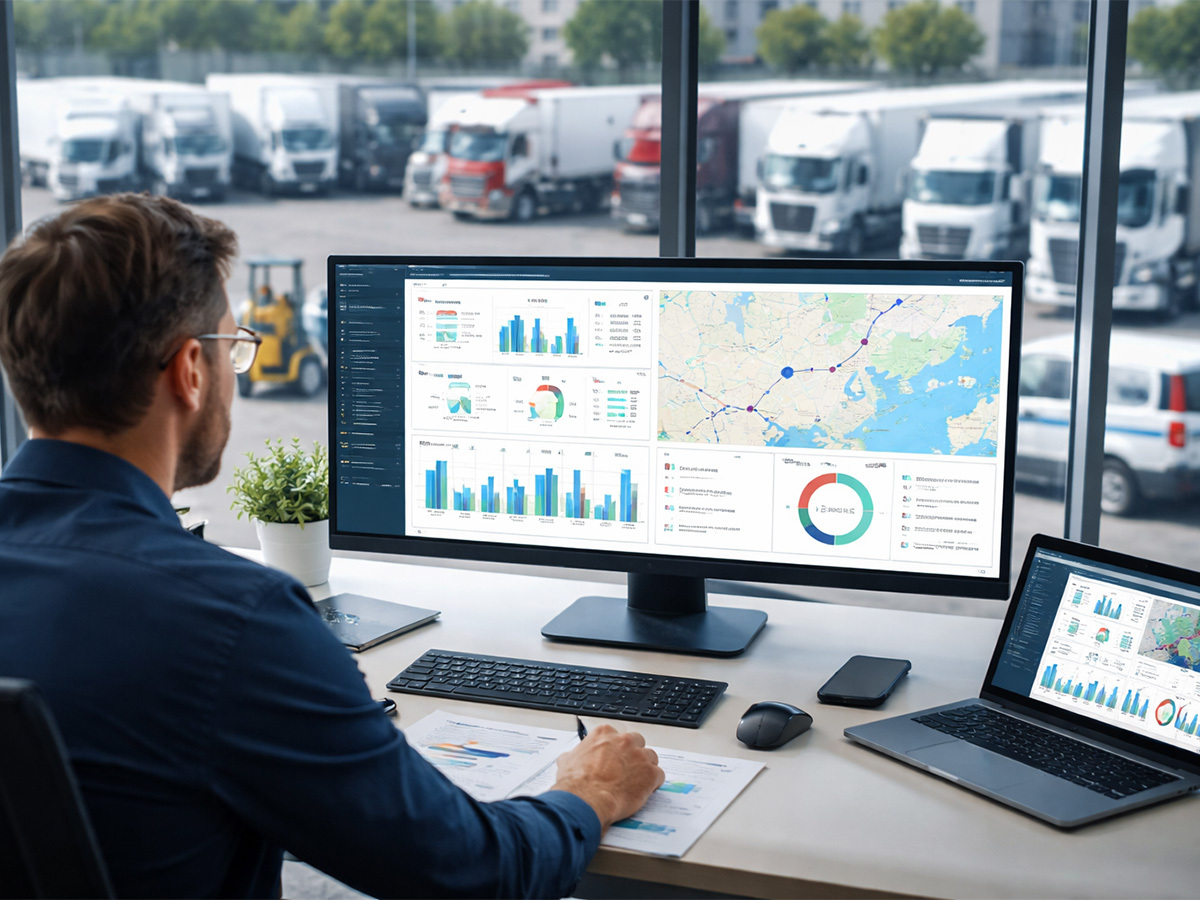
A fleet management system is a software solution that helps businesses manage their vehicles, drivers, and overall fleet operations efficiently. It’s not just about tracking vehicles—it’s about collecting data, analyzing it, and using it to make smarter decisions.
In practical terms, a fleet management system allows managers to monitor vehicle locations in real time, track driver performance, schedule maintenance, optimize routes, and control fuel costs. It ensures that operations run smoothly, safely, and cost-effectively.
For businesses in logistics, transportation, or delivery, whether you operate 10 trucks or 1,000 delivery vans, even minor inefficiencies can quickly become expensive. A fleet management system solves these problems by providing visibility, insights, and automation—all in one platform.
◉ Types of Fleet Management Systems
Not every fleet management system is built the same. Businesses have different goals, fleet sizes, and operational challenges, and picking the right system can mean the difference between efficiency and constant firefighting.
1. Vehicle Tracking Systems (VTS)
If you’ve ever wished you could see where every vehicle in your fleet is at any moment, a vehicle tracking system makes that possible. It gives you a live view of your trucks, vans, or delivery vehicles, showing routes, idle times, and speed. With this visibility, managers can quickly react to delays, reroute vehicles when needed, and make sure operations run smoothly without constant guesswork.
2. Driver Management Systems
Managing a fleet isn’t just about vehicles—it’s about the people behind the wheel. Driver management systems monitor behavior like harsh braking, speeding, and excessive idling. By understanding how your drivers are performing, businesses can coach them toward safer, more efficient habits, which not only reduces accidents but also lowers insurance and operational risks.
3. Fleet Maintenance Management Systems
Nothing disrupts operations faster than a breakdown. This system helps businesses stay ahead of these problems by automating service schedules and tracking repair histories. This means fewer emergency repairs, less downtime, and longer vehicle lifespans—keeping your fleet reliable and your operations predictable.
4. Fuel Management Systems
Fuel costs can quickly become a huge expense, especially for larger fleets. Fuel management systems monitor consumption patterns, flag unusual usage, and highlight opportunities to cut waste. With these insights, businesses can save significantly while keeping fuel usage efficient and sustainable.
5. Route Optimization and Dispatch Systems
Deliveries aren’t just about getting from point A to B—they’re about doing it smartly. Route optimization and dispatch systems plan the fastest, most efficient routes based on traffic, priorities, and vehicle availability. The result? Less time on the road, lower fuel costs, and happier customers because deliveries arrive on time.
6. Comprehensive Fleet Management Systems
For businesses that want the full picture, comprehensive fleet management systems bring it all together. They combine vehicle tracking, driver monitoring, maintenance alerts, fuel management, and route optimization in one centralized platform. With dashboards, reports, and analytics, managers can make smarter, data-driven decisions that scale as the fleet grows.

◉ Key Features of a Fleet Management System
Modern fleet management software is packed with features, each designed to solve specific challenges that fleet operators face daily. Here are the most crucial ones:
• Real-Time GPS Tracking
Know where every vehicle is at any moment. This allows you to manage delays, reroute vehicles, and respond instantly to emergencies.
• Driver Behavior Monitoring
Track unsafe driving patterns such as speeding, harsh braking, or excessive idling. Improving driver habits reduces accidents and lowers insurance costs.
• Vehicle Maintenance Scheduling
Avoid costly breakdowns by scheduling preventive maintenance automatically based on mileage or engine hours.
• Fuel Management
Monitor fuel consumption and detect unusual patterns that may indicate theft or inefficiency. Fuel savings alone can justify the investment.
• Route Optimization
Advanced algorithms calculate the most efficient routes, saving time, fuel, and reducing delivery delays.
• Reporting and Analytics
Detailed reports provide actionable insights. Managers can identify trends, optimize operations, and make informed business decisions.
Some systems also include mobile apps for drivers, integration with ERP or CRM systems, and AI-powered predictive analytics for maintenance and route planning. These features are increasingly becoming standard in modern fleet management software.
You May Also Like: Cost to Build a Route Planning App Like Komoot
◉ Use Cases of Fleet Management Systems
Fleet management systems are versatile and provide benefits across industries:
- Logistics & Delivery: Companies can monitor vehicle locations, optimize routes, and ensure timely deliveries. This improves customer satisfaction and reduces operational costs.
- Public Transport: Buses and trains can be tracked in real-time, allowing for better scheduling, maintenance planning, and enhanced passenger experience.
- Field Services: Service vehicles can be dispatched efficiently, ensuring technicians reach customer locations on time while minimizing travel costs.
- Construction & Heavy Equipment: Fleet management systems track heavy machinery and vehicles, preventing downtime and improving utilization rates.
- E-commerce & Retail: Delivery fleets can operate more efficiently, reducing missed deliveries and fuel costs, which is crucial in today’s competitive online shopping market.
With AI, predictive analytics, and real-time data, fleet management systems give businesses the visibility and control needed to scale efficiently and stay competitive.
You May Also Like: Cost to Build a Logistics App Like Aramex
◉ Cost to Develop a Fleet Management Software
The cost of building a fleet management software depends on what you want it to do, the size of your fleet, and the technology behind it. There is no fixed budget because the cost varies based on features, UI/UX design, level of complexity, and the location of your development team.
However, to give you a rough estimation:
- Basic software: $8,000 – $15,000, covering essential features like vehicle tracking, driver monitoring, and basic reporting.
- Mid-level software: $15,000 – $30,000, including route optimization, fuel management, maintenance scheduling, and mobile apps.
- Advanced software: $30,000 – $50,000+, featuring AI-powered analytics, predictive maintenance, ERP/CRM integrations, and real-time dashboards.
Ultimately, the fleet management software development cost depends on your business needs, the features you choose, and the scale of your operations. Investing in the right system ensures your fleet runs smoothly, minimizes operational challenges, and supports smarter day-to-day decisions.
◉ How Can PeppyOcean Help You Develop Fleet Management Software?
Building a fleet management system can be complex, but partnering with the right development team makes all the difference. PeppyOcean specializes in designing and developing custom fleet management software that aligns with your business goals and operational needs.
From real-time vehicle tracking and driver monitoring to AI-powered analytics and predictive maintenance, we help businesses create solutions that improve efficiency, reduce costs, and provide actionable insights.
Our approach is collaborative: we work closely with your team to understand your fleet size, workflows, and unique challenges, ensuring the software is tailored to your operations. With expertise in AI, cloud integration, mobile apps, and security compliance, we deliver a solution that is scalable, reliable, and future-ready.
In short, partnering with PeppyOcean means getting a fleet management solution that saves time, cuts costs, improves efficiency, and gives you complete control over your operations.
◉ Final Thoughts
Success in fleet operations comes from clarity, control, and decisive action. Businesses that embrace a structured approach see their fleets operate smoothly, respond quickly to challenges, and maintain a competitive edge. In today’s fast-paced market, the ability to manage fleets with precision and confidence separates leaders from the rest.
A fleet management system brings this strategy to life. By consolidating real-time data, tracking performance, and streamlining workflows, it enables smarter decisions, maximizes productivity, and turns fleet operations into a strategic advantage that drives growth and excellence.

Chirag Vaghasiya is a Sr. SEO Executive at XongoLab Technologies LLP and PeppyOcean having skills in on-page optimization, off-page optimization, website promotion on major search engines, competitor research, internet marketing, quality link building, content optimization, and SMO.
You may also like

AI-Powered Courier Delivery Apps: Cost, Features & Expert Insights
-
Ankit Patel
Imagine this. Your delivery team is juggling hundreds of packages, traffic is unpredictable, and customers are constantly calling to check the status of their orders. Every delay, missed delivery, or miscommunication costs you money and damages your reputation. Now, imagine a system that thinks faster than any human, predicts the best routes, assigns the right… Read More
Top Features That Make Your Food Delivery App Stand Out in 2026
-
Open any app store in 2026 and you’ll see hundreds of food delivery apps competing for attention. Most of them look similar. Same layouts. Same promises. Same discounts. And yet, only a handful manage to stay installed on users’ phones. The reason is simple: users don’t remember apps that feel ordinary. They remember apps that… Read More

How Much Does It Cost to Build an On‑Demand App With AI Features
-
Imagine two on-demand apps offering the same service. One simply takes orders and delivers them. The other predicts what users want, recommends services before they search, adjusts pricing in real time, optimizes routes automatically, and resolves customer issues without human intervention. Now ask yourself — which one wins in 2026? The answer is already visible… Read More
Recent Posts
 AI-Powered Courier Delivery Apps: Cost, Features & Expert Insights
 Top Features That Make Your Food Delivery App Stand Out in 2026
 How Much Does It Cost to Build an On‑Demand App With AI Features
 How Much Does It Cost to Build a Fleet Management Software?
 How Much Does It Cost To Build An App Like Citymapper?