
Top Features That Make Your Food Delivery App Stand Out in 2026
-
Chirag Vaghasiya
- January 20, 2026
- 7 min read
Open any app store in 2026 and you’ll see hundreds of food delivery apps competing for attention. Most of them look similar. Same layouts. Same promises. Same discounts. And yet, only a handful manage to stay installed on users’ phones.
The reason is simple: users don’t remember apps that feel ordinary. They remember apps that save time, feel intuitive, and work flawlessly when hunger strikes. Today, speed, intelligence, and experience matter far more than the number of restaurants listed.
Food delivery has evolved into a high-expectation product category. Users now expect instant recommendations, accurate delivery times, and zero friction from ordering to doorstep. When an app fails to meet these expectations, users move on without hesitation.
The numbers show just how big this shift is. Revenue in the food delivery market is set to soar from $1.54 trillion in 2026 to $2.03 trillion by 2030. In the United States, DoorDash commands more than 65% of the market, while global leaders like Uber Eats and Zomato continue to expand worldwide. By 2030, meal delivery users are expected to reach 2.5 billion, highlighting just how massive and fast-growing this market has become.
The surge in mobile ordering has sparked a boom in food delivery app development, with platforms adopting advanced features like AI-powered recommendations, real-time tracking, hyperlocal promotions, and seamless checkout to deliver standout experiences.
In this blog, we break down the must-have features to include in food delivery apps, showing how they shape the way users interact with your app and why they are essential for standing out in a crowded market.
◉ The New Reality of Ordering Food in 2026
Today, users don’t just want food; they want control, convenience, and choice. With just a few taps, they want to order food online from their favorite restaurants, track it live, and receive it quickly. Apps like Zomato, Grubhub, Talabat, and Uber Eats have raised the bar, driving the food delivery industry to innovate continually.
Success in 2026 depends on how smart, flexible, and human your app feels. Let’s explore the features that truly make a difference.
You May Also Like: Why Invest in Building a Food Delivery App & How Much It Costs?
◉ Must-Have Features to Include in Food Delivery Apps
To succeed in today’s competitive food delivery market, your app needs features that go beyond basic ordering. The right features can make ordering faster, smarter, and more enjoyable, turning casual users into loyal customers.
1. AI-Powered Personalized Food Recommendations
Personalization is no longer optional. Users expect apps to understand their tastes, habits, and context, such as time of day or even weather. AI in food delivery app systems analyzes past orders, browsing behavior, and patterns to recommend meals that feel relevant and timely.
For example, if a user prefers healthy meals on weekdays and fast food on weekends, the app can highlight those choices automatically, increasing repeat orders while helping users discover new restaurants.
2. Voice and Conversational Ordering
Typing is slowly being replaced by talking. Today, many users prefer to place orders using voice assistants or chat-based interfaces. Smart voice search allows users to say things like, “Order my usual pizza,” or “Find spicy Asian food near me.”
Conversational ordering reduces friction and makes the food ordering app feel more natural and accessible, especially for elderly users or people on the go.
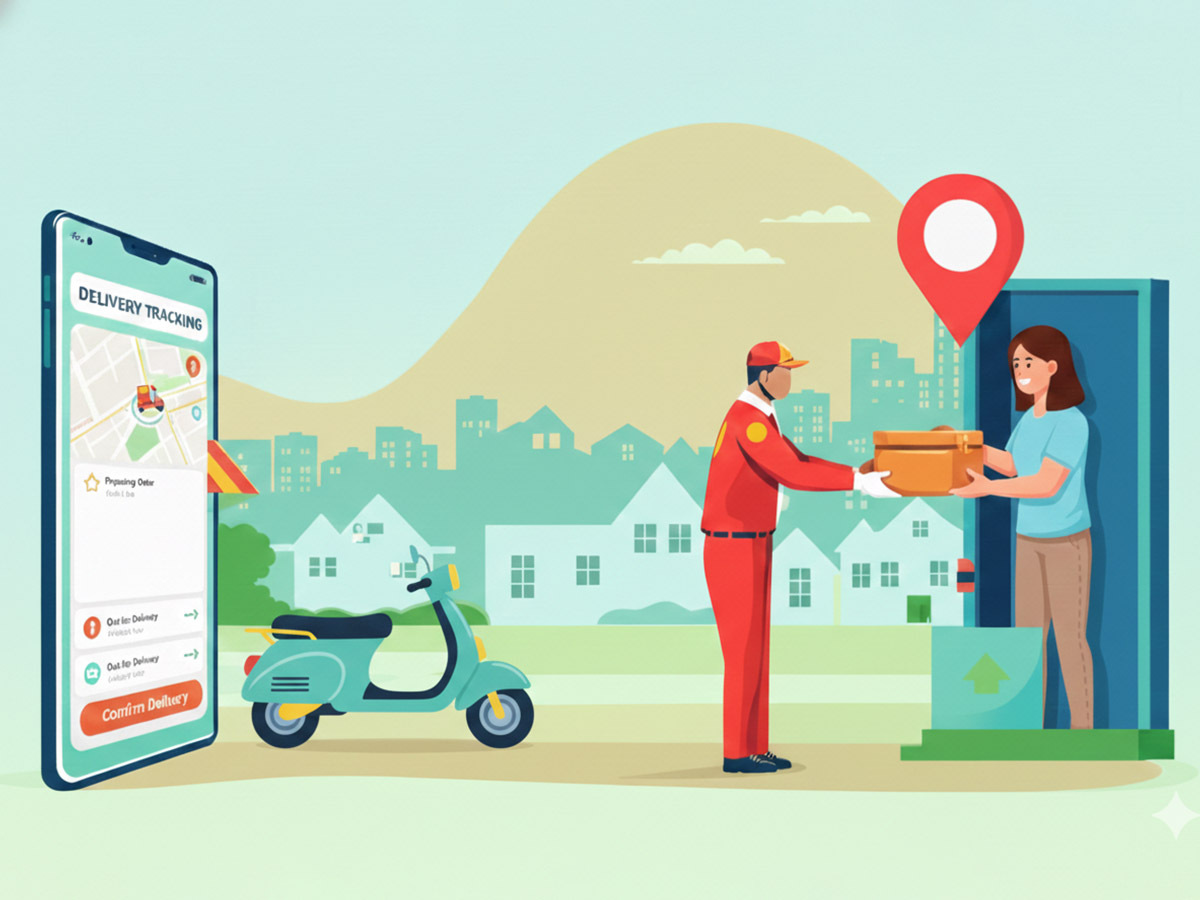
3. Real-Time Order Tracking with Smart Updates
Basic tracking is not enough anymore. Users want real-time visibility with accurate updates at every stage. Advanced tracking systems show food preparation status, rider location, traffic delays, and exact arrival time.
Push notifications should feel helpful, not annoying. Smart alerts like “Your rider is 3 minutes away” or “Restaurant is preparing your meal faster than usual” build excitement and trust in your food delivery app.

4. Ultra-Fast Checkout and One-Tap Reordering
Speed is a major factor in user retention. Long checkout processes lead to abandoned carts. In 2026, apps focus on one-tap ordering, saved preferences, and instant payment options.
Users should be able to reorder their favorite meals in seconds. This feature is especially important for any growing food delivery business aiming for high daily order volumes.
5. Multiple Payment Options Including Digital Wallets
Modern users expect flexibility in payments. Credit cards alone are not enough. Your app should support digital wallets, UPI, buy-now-pay-later options, and even region-specific payment methods.
Secure and fast payments build confidence and make the overall experience smoother, especially in competitive urban markets.
6. Smart Search with Filters That Actually Work
Search is one of the most used features in any app. In 2026, smart search means more than typing a restaurant name. Users want filters for diet type, calories, delivery time, price range, and ratings.
Advanced search helps users quickly find what they want, which is critical in the fast-growing food delivery industry.
7. Cloud Kitchens and Virtual Restaurant Support
Cloud kitchens are growing rapidly because they reduce costs and increase scalability. A modern app should easily onboard and manage virtual brands.
This feature is especially important for businesses entering the online food delivery market, as it allows experimentation with new food concepts without physical locations.
You May Also Like: Top 11 Mobile App Ideas For Restaurant and Food Businesses
8. AI-Based Delivery Route Optimization
Fast delivery depends on smart logistics. AI-based route optimization helps delivery partners avoid traffic, choose the fastest routes, and deliver more orders in less time.
This improves customer satisfaction and reduces operational costs, making it a must-have in advanced food delivery app features.
9. Sustainability and Eco-Friendly Options
Users care deeply about the environment. Apps that offer eco-friendly packaging options, carbon-neutral delivery, or green badges for restaurants gain user trust.
Highlighting sustainability choices also improves brand image and aligns with global trends.
10. In-App Customer Support with AI Chatbots
Users want instant help when something goes wrong. AI-powered chatbots can handle common issues like delayed orders, refunds, or address changes without human intervention.
For complex cases, smooth handoff to human support is essential. This balance is a key focus area in food delivery app development today.
11. Advanced Restaurant Analytics Dashboard
Restaurant partners want data-driven insights. A strong backend dashboard shows order trends, peak hours, customer feedback, and menu performance.
This feature strengthens partnerships and helps restaurants grow within your platform, which is crucial when building a food delivery app for long-term success.
12. Hyperlocal Promotions and Smart Offers
Generic discounts no longer work. In 2026 and beyond, apps use location-based and behavior-based promotions. For example, lunch offers near offices or late-night deals for students.
Smart offers increase conversion and keep users engaged without hurting margins.
13. Social Proof and Community Features
Users trust other users more than ads. Reviews, ratings, photos, and even short video reviews help users make faster decisions.
Some apps also allow users to follow food creators or local influencers, adding a social layer to the experience.
14. Scalability to Match Global Standards
If you plan to build an app like DoorDash, your platform must be scalable from day one. This includes handling high traffic, multiple cities, and different regulations.
A strong architecture ensures smooth performance even during peak hours or big promotional events.
15. Localization for Different Regions
Global apps succeed because they adapt locally. To expand into new regions successfully, you need local language support, regional cuisines, and area-specific payment methods.
Localization makes users feel understood and increases adoption in new markets.
16. Compliance, Security, and Data Privacy
Users trust apps with their personal and payment data. Strong security measures, encrypted transactions, and compliance with data protection laws are essential.
A reliable food delivery app development company ensures your app meets all technical and legal standards.
17. Future-Ready Tech Stack
To compete with global delivery leaders, you need a modern tech stack that supports AI, cloud infrastructure, and third-party integrations.
Future-ready technology allows easy updates, new feature rollouts, and long-term scalability.

◉ How PeppyOcean Helps You Build a Standout Food Delivery App
At PeppyOcean, we develop food delivery apps that set new standards in speed, innovation, and user experience. From AI-powered recommendations and real-time order tracking to seamless checkout and hyperlocal promotions, we ensure every feature is designed to delight users.
Whether you want to build an app like DoorDash or Deliveroo or create a unique food delivery platform for your target market, our team integrates robust security, scalable architecture, and cutting-edge technology to support growth and handle high traffic with ease.
With PeppyOcean, your app won’t just deliver meals. It will deliver trust, engagement, and a memorable experience that keeps users coming back.
◉ Conclusion
In 2026 and beyond, a successful food delivery app is not just about delivering food. It’s about delivering experience, trust, and value at every step. From AI-powered personalization to sustainable practices, every feature should solve a real user problem.
As competition grows and user expectations rise, investing in the right features and technology becomes critical. The apps that lead the market will be those that stay flexible, user-focused, and innovation-driven.
Use these features as your blueprint to build a food delivery app that delights users, boosts repeat orders, and rises above the competition.
◉ Frequently Asked Questions (FAQs)
1. What features make a food delivery app successful in 2026?
Success depends on speed, personalization, and convenience. Key features include AI-powered meal recommendations, real-time order tracking, one-tap checkout, smart search, multiple payment options, and voice ordering. Apps that combine these features create a seamless, engaging experience that keeps users coming back.
2. How does AI improve food recommendations and delivery?
AI studies users’ past orders, browsing behavior, and preferences to suggest meals they’ll love. It also optimizes delivery routes, predicts busy hours, and personalizes offers. This increases user satisfaction, boosts repeat orders, and makes operations more efficient.
3. Why is real-time tracking important for users?
Users want transparency at every stage—from restaurant preparation to doorstep delivery. Real-time tracking with smart notifications reduces uncertainty, builds trust, and makes the app feel reliable and professional.
4. How can food delivery apps support multiple payment options?
Modern users expect flexibility. Supporting credit/debit cards, digital wallets, UPI, buy-now-pay-later, and regional payment methods ensures faster transactions, fewer abandoned carts, and higher user confidence.
5. How do cloud kitchens and virtual restaurants benefit food delivery apps?
Cloud kitchens reduce overhead and allow easy experimentation with new cuisines. Virtual restaurants expand menu variety without physical locations, helping apps attract more users and increase order volume.
6. What role do promotions and loyalty programs play?
Hyperlocal promotions, personalized discounts, and loyalty rewards encourage repeat orders. Users feel valued, engagement increases, and apps can drive higher sales without cutting margins.
7. How important is security and data privacy in food delivery apps?
Extremely important. Encrypted transactions, compliance with data protection laws, and secure user accounts build trust. Users are more likely to use apps that guarantee safety for their personal and payment information.
8. Can new startups compete with giants like DoorDash and Uber Eats?
Yes. By focusing on innovation, speed, AI personalization, and superior user experience, new apps can attract loyal users and carve out a niche even in a highly competitive market.

Chirag Vaghasiya is a Sr. SEO Executive at XongoLab Technologies LLP and PeppyOcean having skills in on-page optimization, off-page optimization, website promotion on major search engines, competitor research, internet marketing, quality link building, content optimization, and SMO.
You may also like
Gojek Clone App Development: How AI Is Transforming Multi-Service Apps
-
Ankit Patel
Customers increasingly expect digital platforms to handle multiple everyday needs through a single application. From booking rides and ordering food to purchasing groceries, sending parcels, and hiring professionals, convenience has become a major part of the digital service experience. This shift has created opportunities for entrepreneurs looking to build multi-service platforms inspired by successful super-app… Read More
From On-Demand to AI-Powered: The Next Generation of Apps
-
On-demand apps have changed the way people access transportation, food, healthcare, home services, deliveries, and other everyday services. Customers can request what they need, track progress, make payments, and receive services through a single digital platform. But customer expectations are changing. People increasingly want faster responses, personalized recommendations, accurate updates, and smoother digital experiences. Businesses,… Read More
How to Choose an On Demand App Development Company for Your AI-Powered Business
-
Businesses across industries are moving toward on-demand services as customers increasingly expect convenience, speed, and personalized experiences. From food delivery and transportation to healthcare, home services, logistics, and grocery delivery, on-demand platforms are changing how businesses connect with their customers. The market is also becoming increasingly intelligent. The global AI in transportation market is estimated… Read More
Recent Posts
 Gojek Clone App Development: How AI Is Transforming Multi-Service Apps
 From On-Demand to AI-Powered: The Next Generation of Apps
 How to Choose an On Demand App Development Company for Your AI-Powered Business
 AI in Transportation: How Artificial Intelligence Is Transforming the Way We Move
 How Courier App Development Improves Delivery Operations